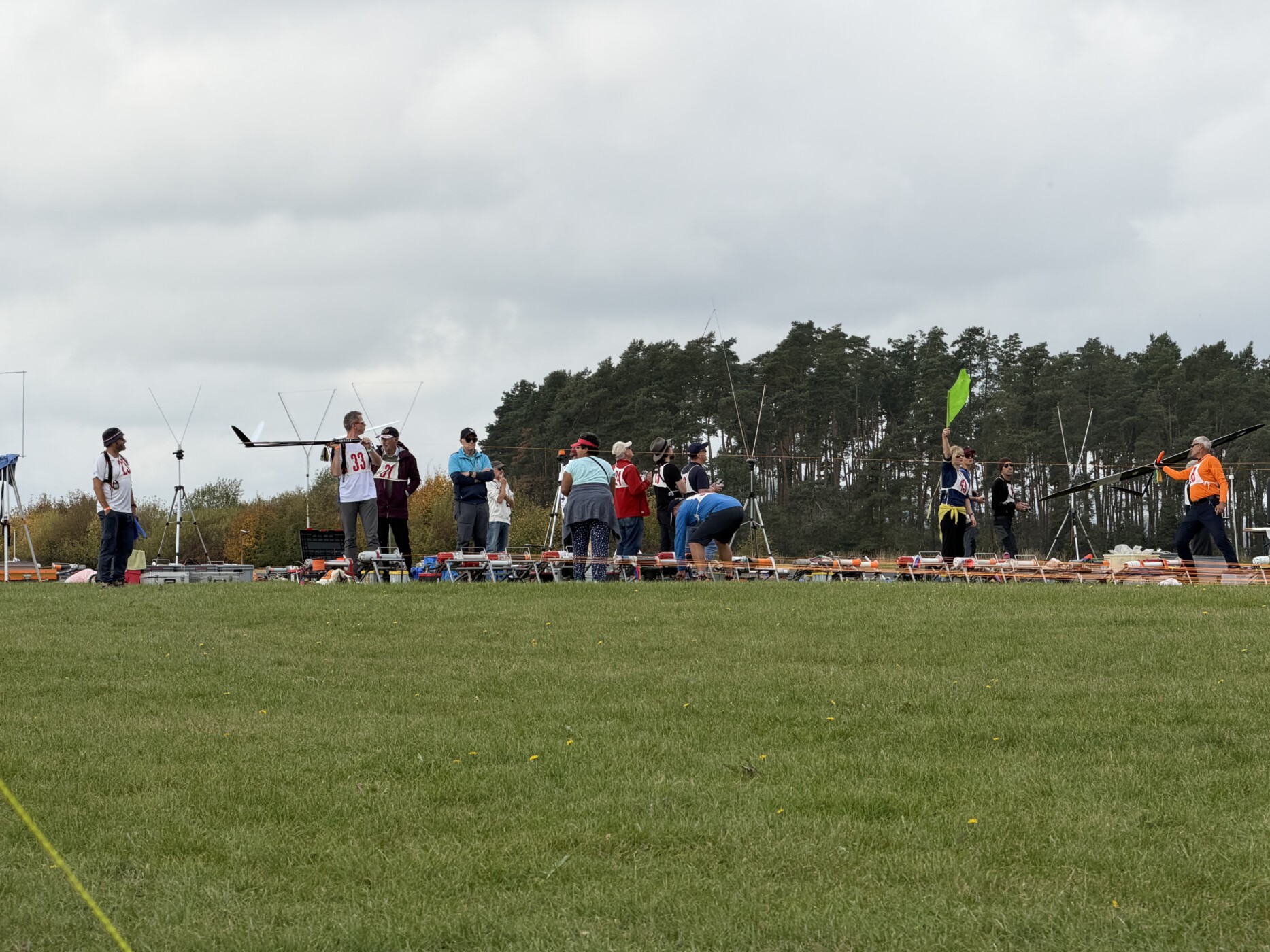
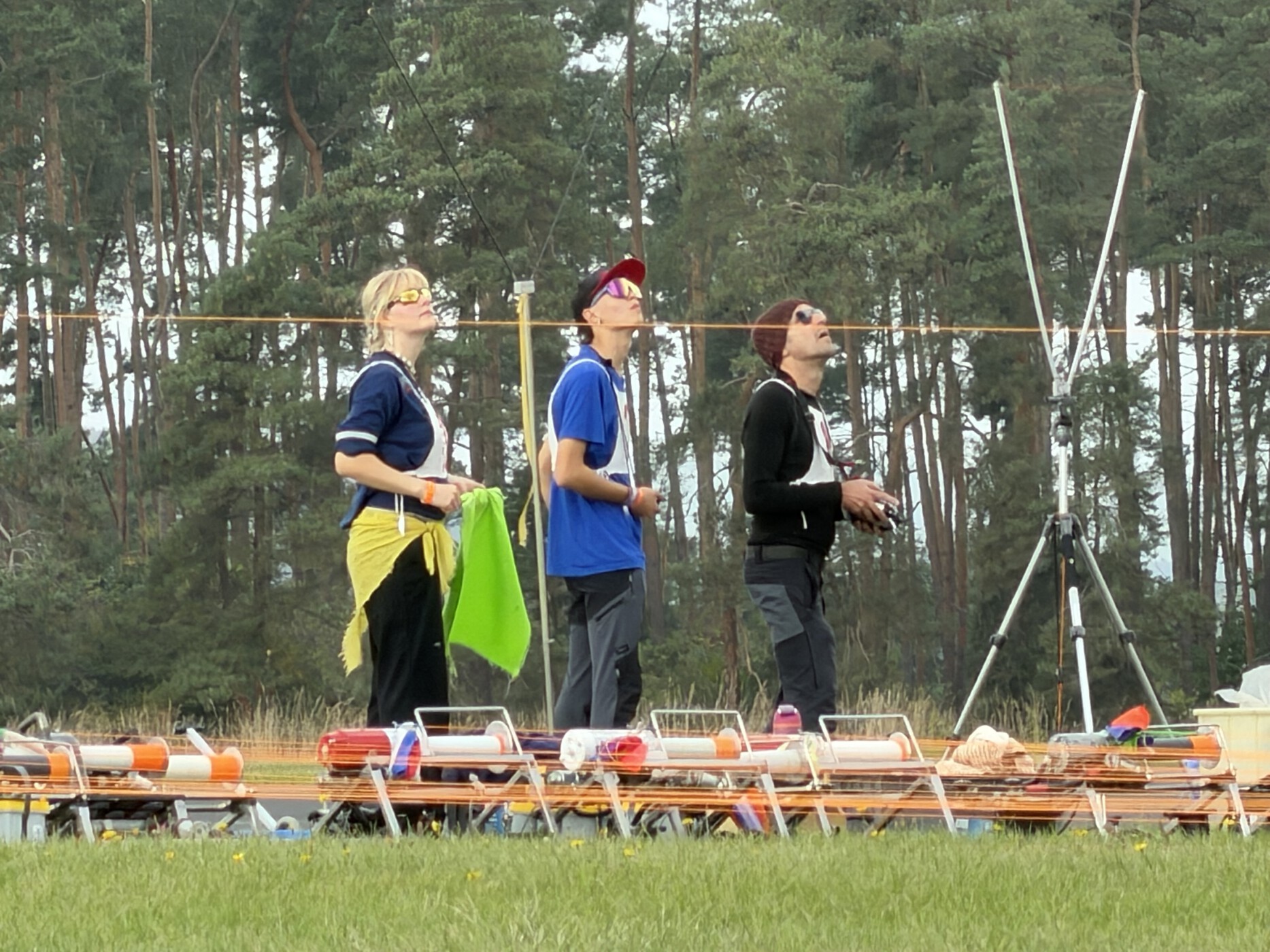
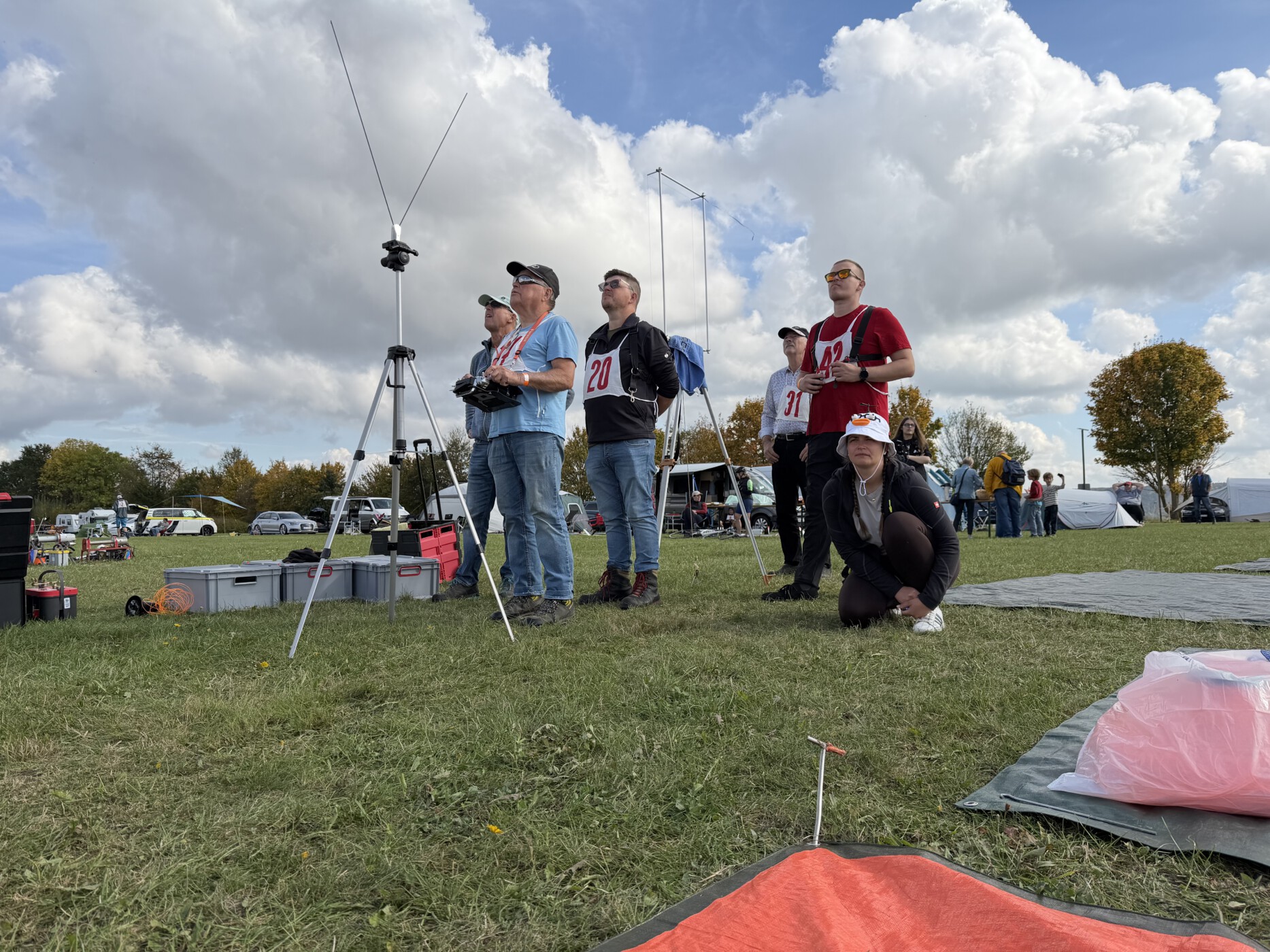
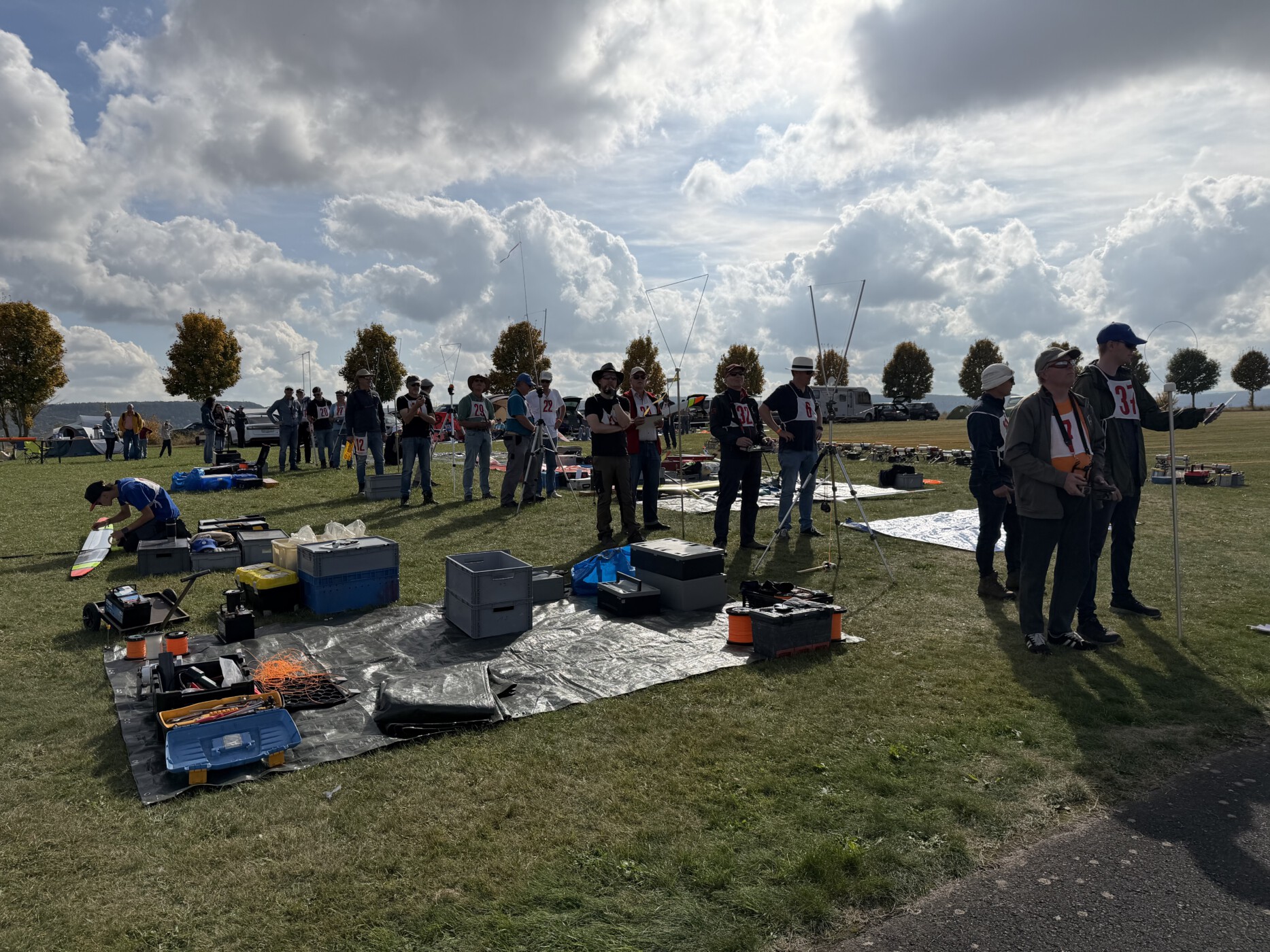
https://www.windfinder.com/forecast/duderstadt_gerblingerode
Contest-Ranking before the competition: https://www.contest-eurotour.com/f3b/f3b-ranking-before-the-last-competition-2026/
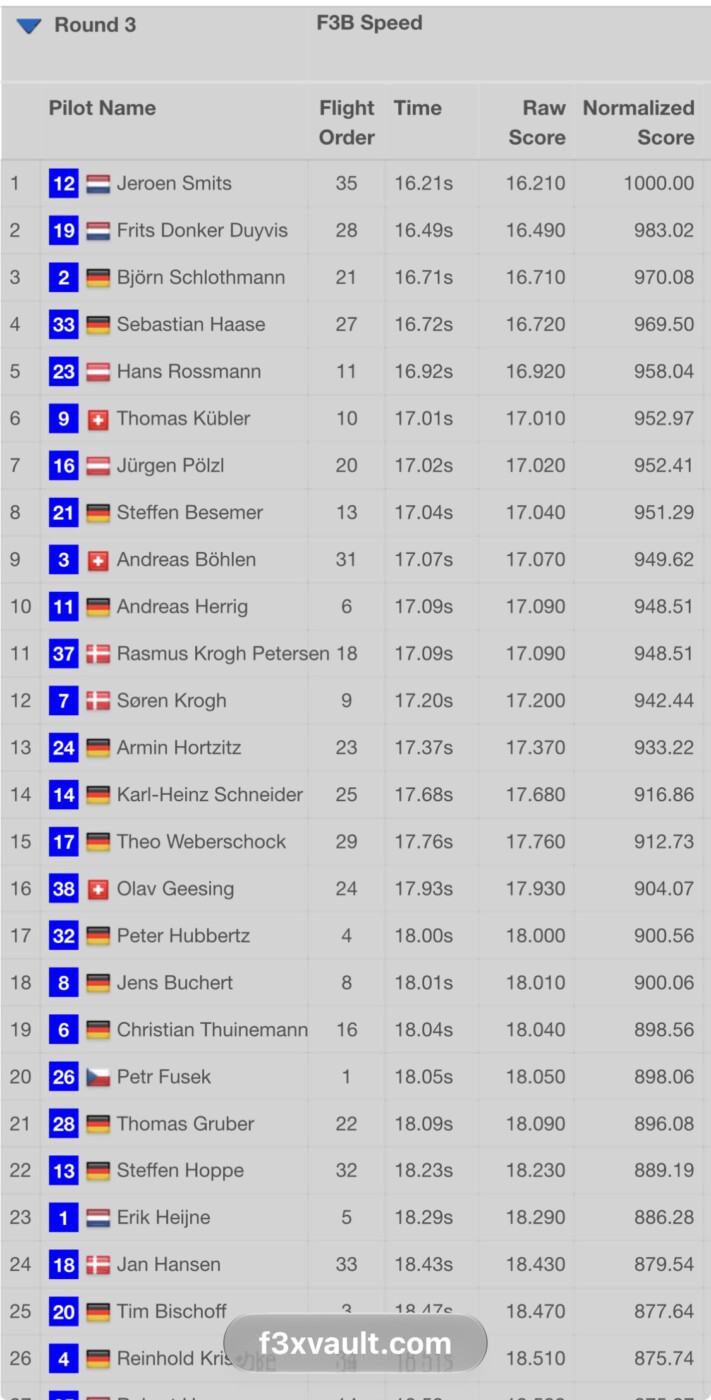
https://f3xvault.com/?action=event&function=event_view&event_id=4138
Have a great time and good flights in Lünen!
Good Luck from Down Under!
-Gavin, Stuey, Christian
—Deutsch ganz unten —
F3B is one of the most demanding and rewarding disciplines in RC soaring — thermal duration, spot landings, and a flat-out speed run that pushes glider and pilot to the limit. But the sport has a staffing problem.
Every aircraft in the distance flight needs two dedicated line judges — one at Base A, one at Base B — each watching for the exact instant a part of the aircraft crosses their line. Run a full round and that’s up to a dozen people tied up on judging duty alone. That’s a heavy ask for organizers — and on a practice day, when nobody’s around to judge, you’re simply flying blind.
F3Cross fixes that. It’s a small, GPS-based electronics system, currently in development, that replaces the line judges entirely — instant, tireless, cheap.

The system has three parts:
The airborne unit knows exactly where Base A and Base B are. The moment the GPS position shows the aircraft has crossed one of those lines, it fires an event and sends it wirelessly to the ground — almost instantly, with none of the reaction-time lag or subjectivity a human judge has. It works just as well solo on a practice day as it does with a full contest.
For reliability, every crossing is sent over two independent radio links at once. If one link drops out, the other one usually still gets through, so a single crossing is less likely to be lost to bad luck on the radio.
This isn’t just a bench project. In testing — including flights with an electric F3B — the system has tracked aircraft up to 660 m in altitude and out to nearly 700 m in distance, and kept catching crossings.
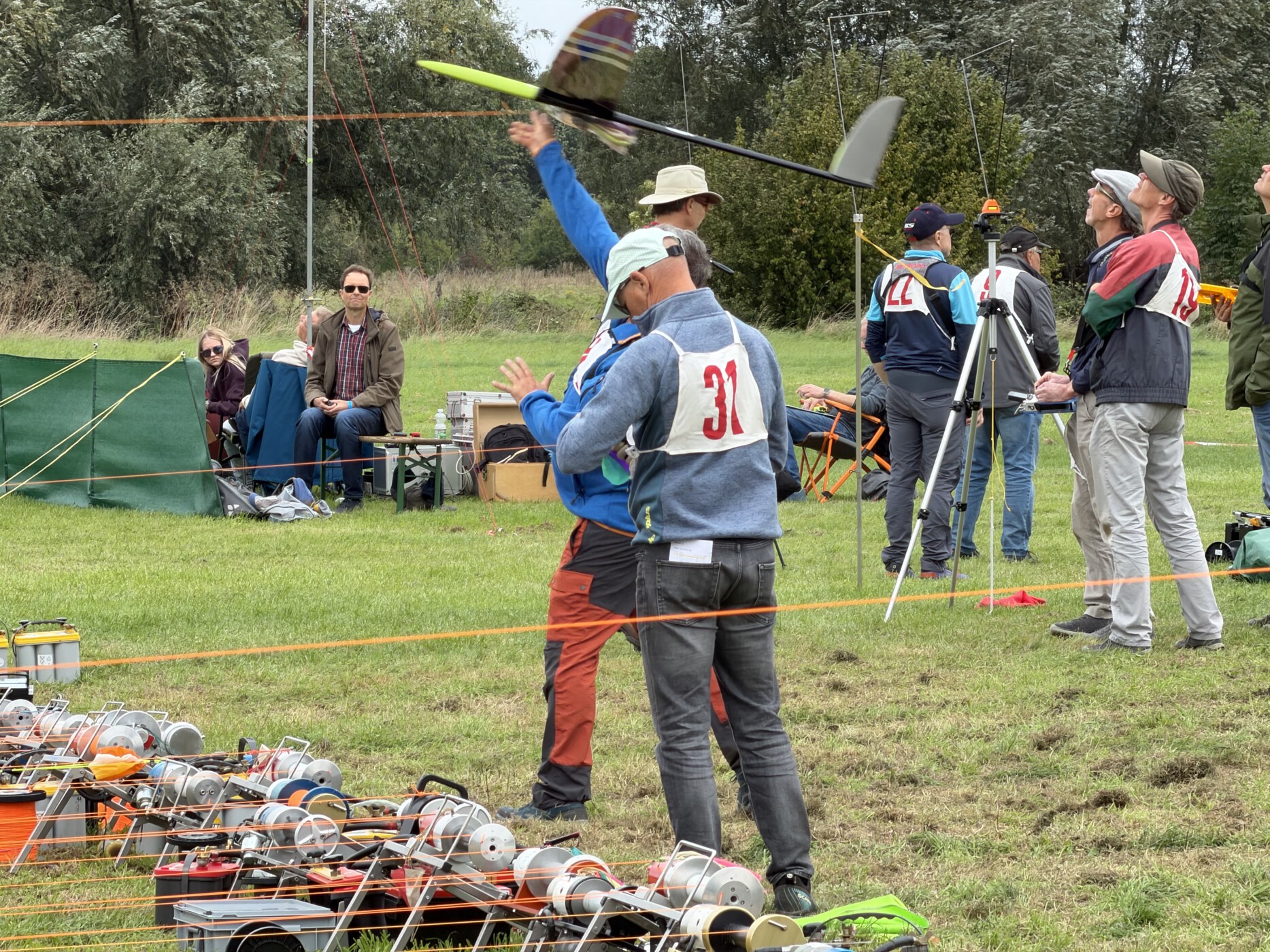
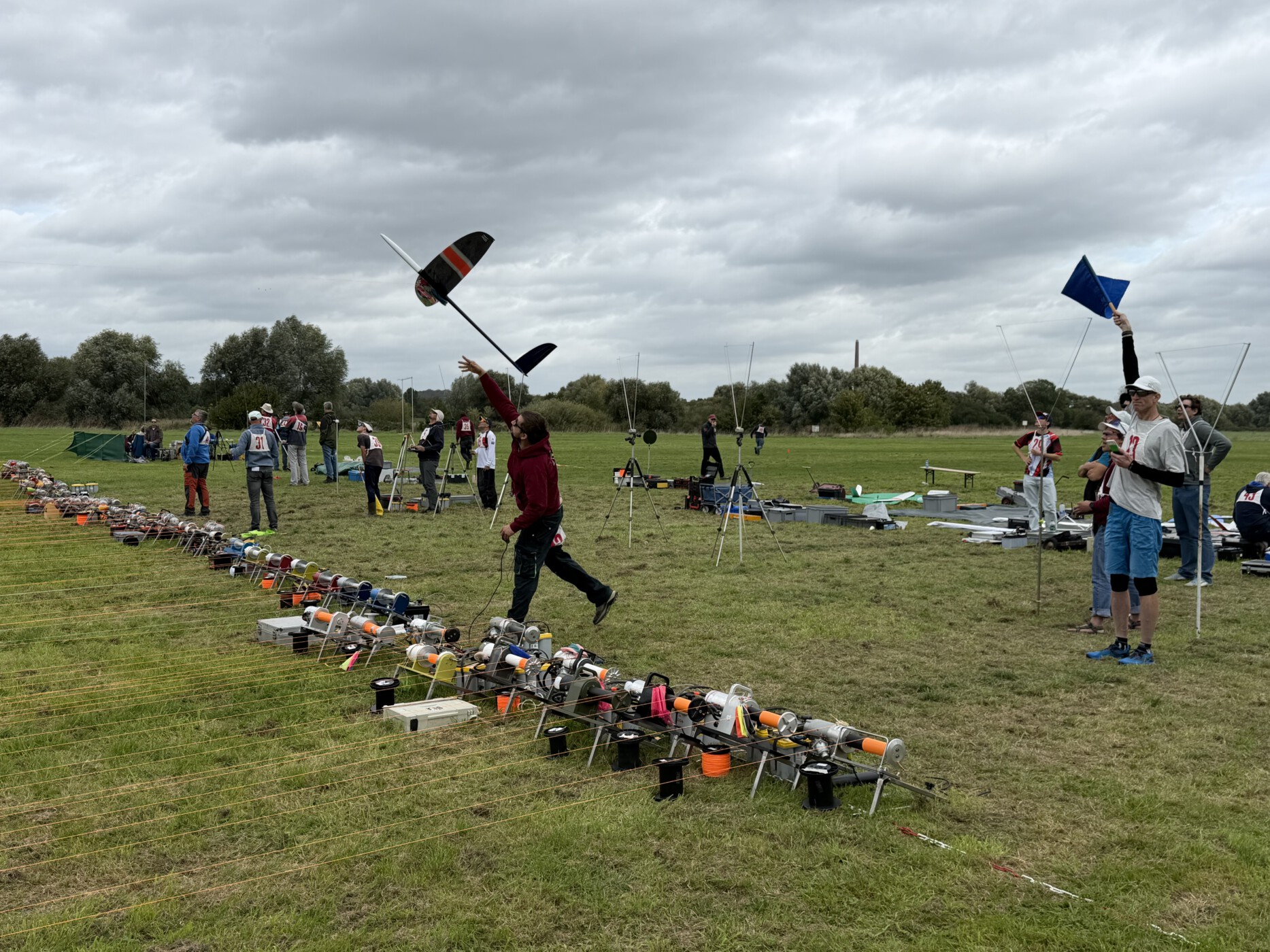
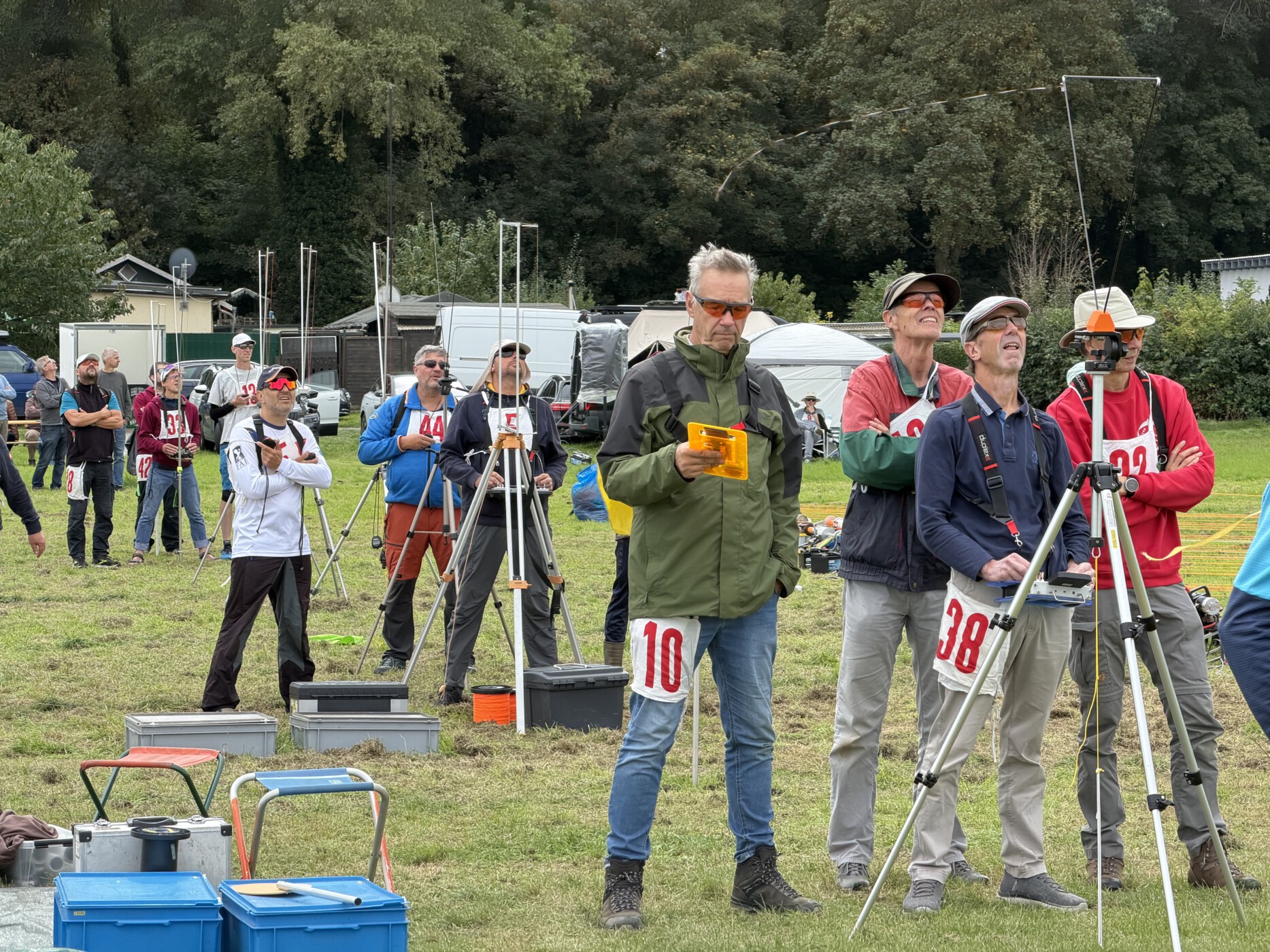
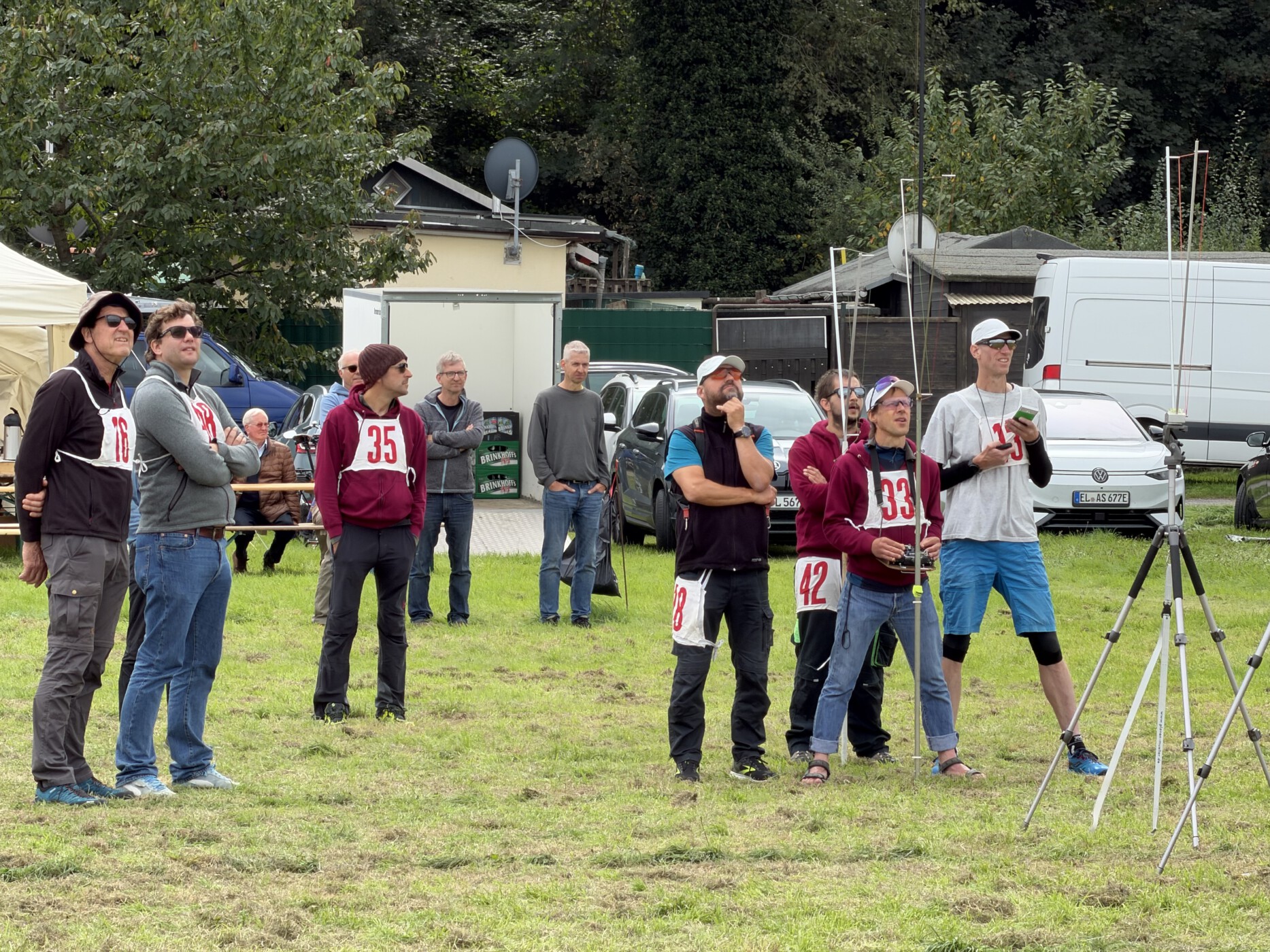
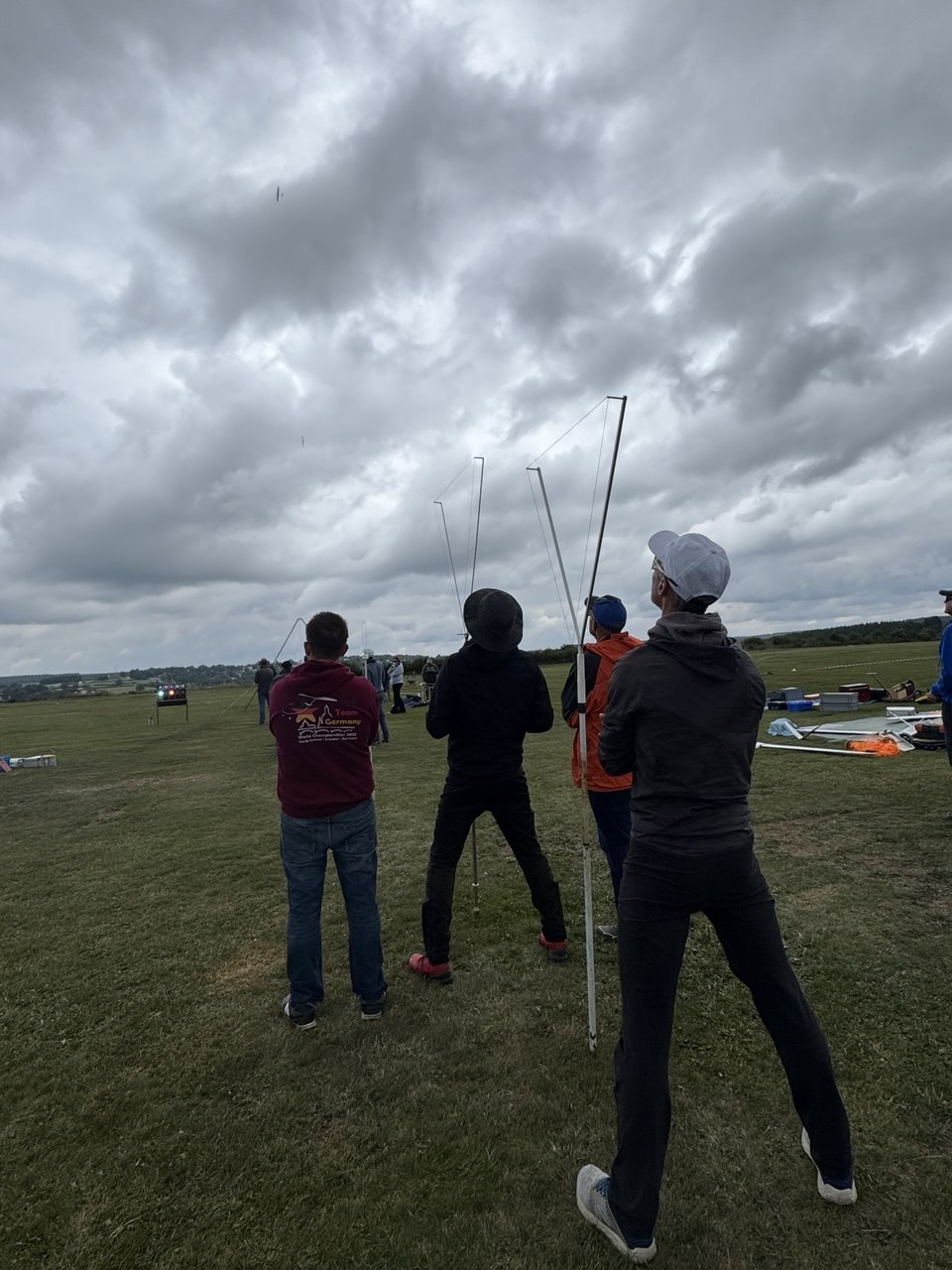
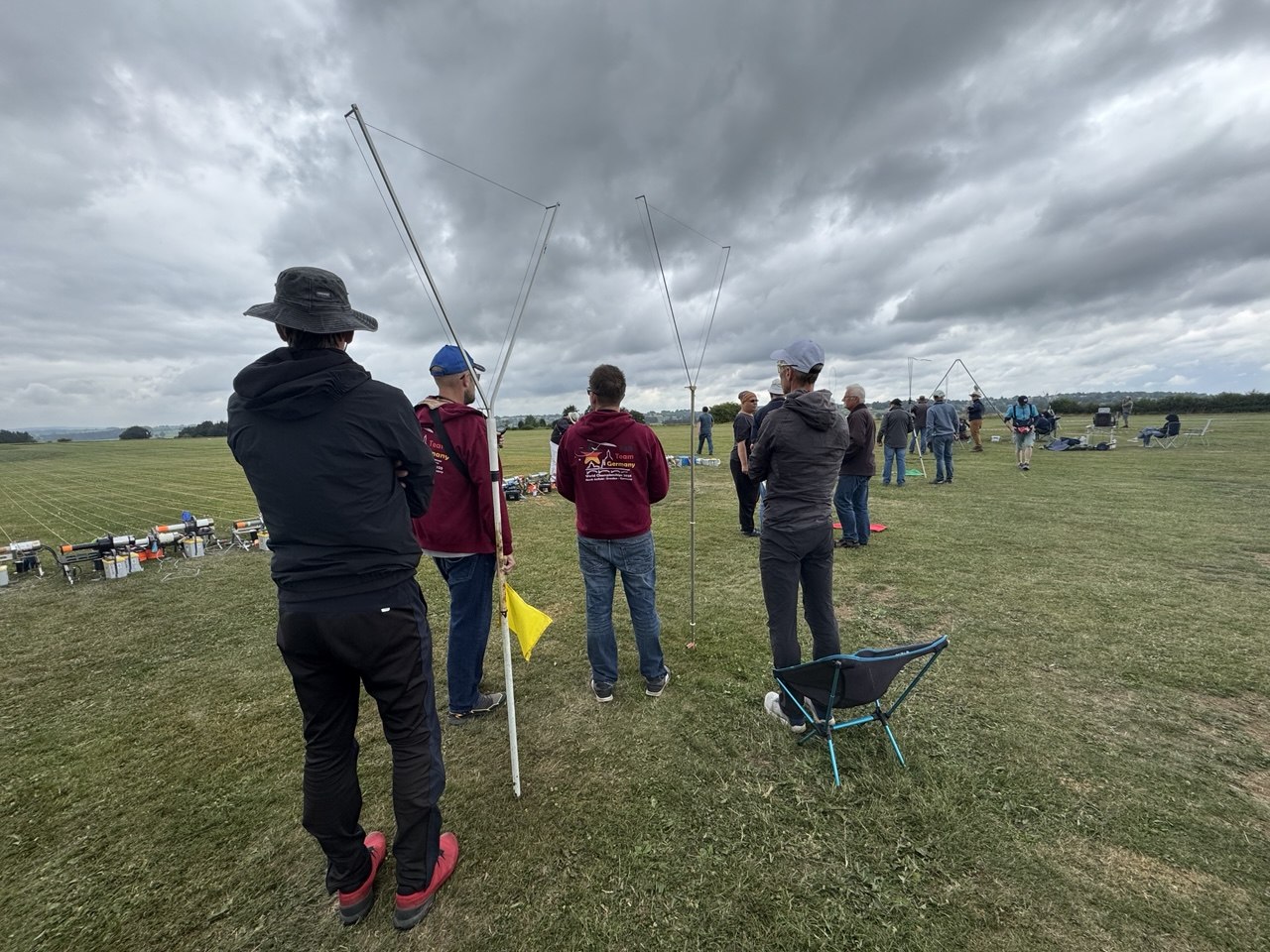
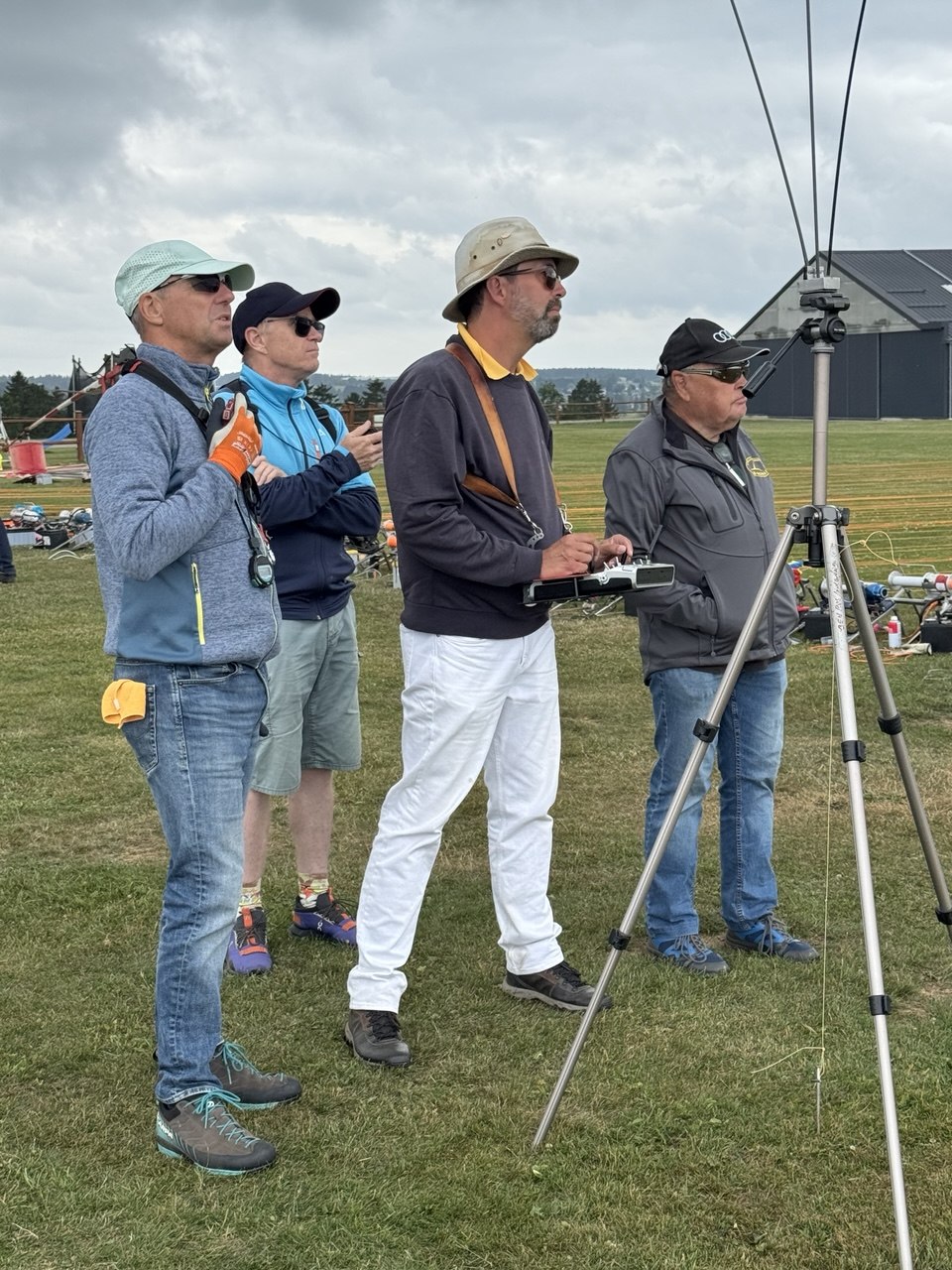
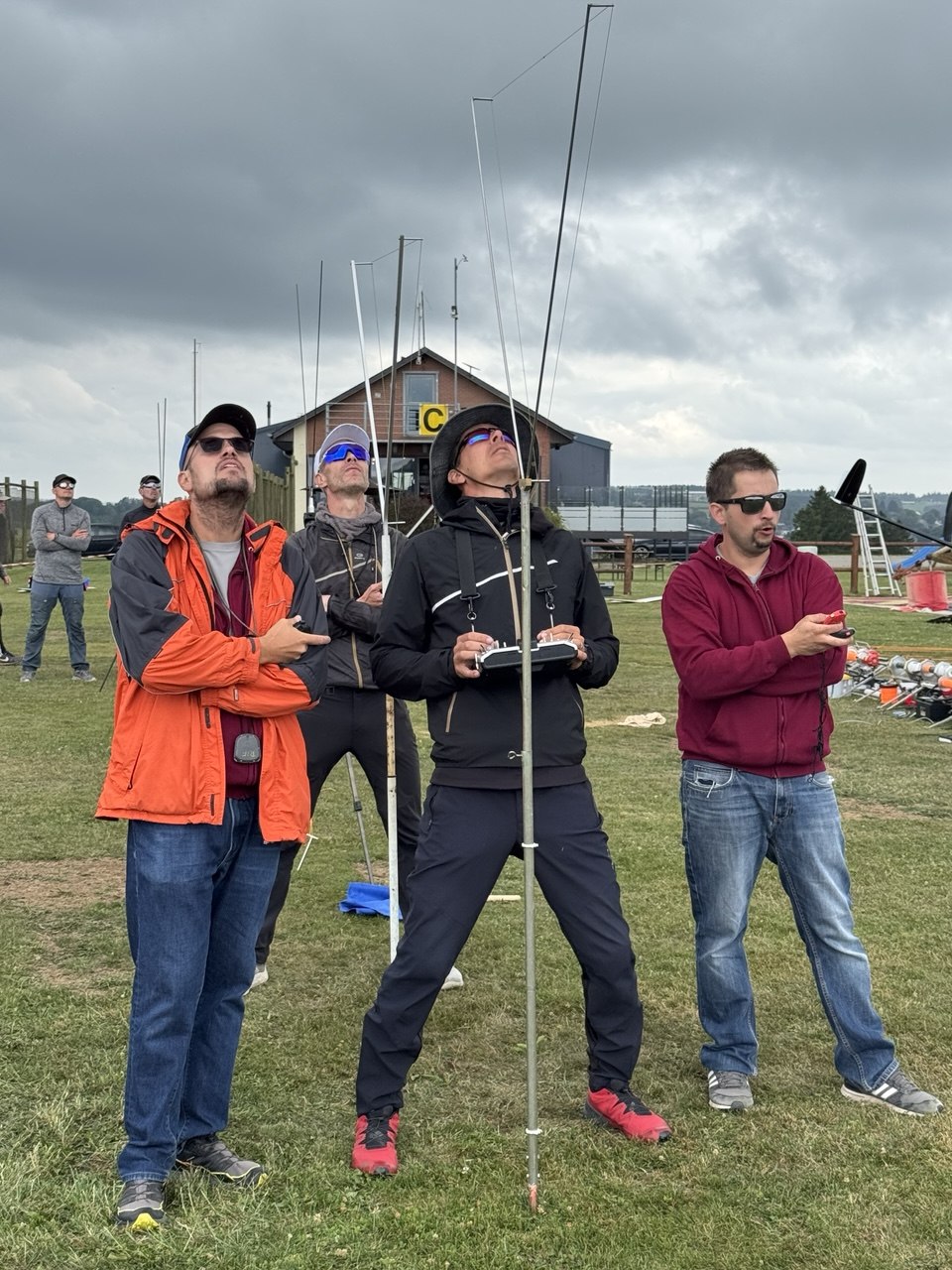
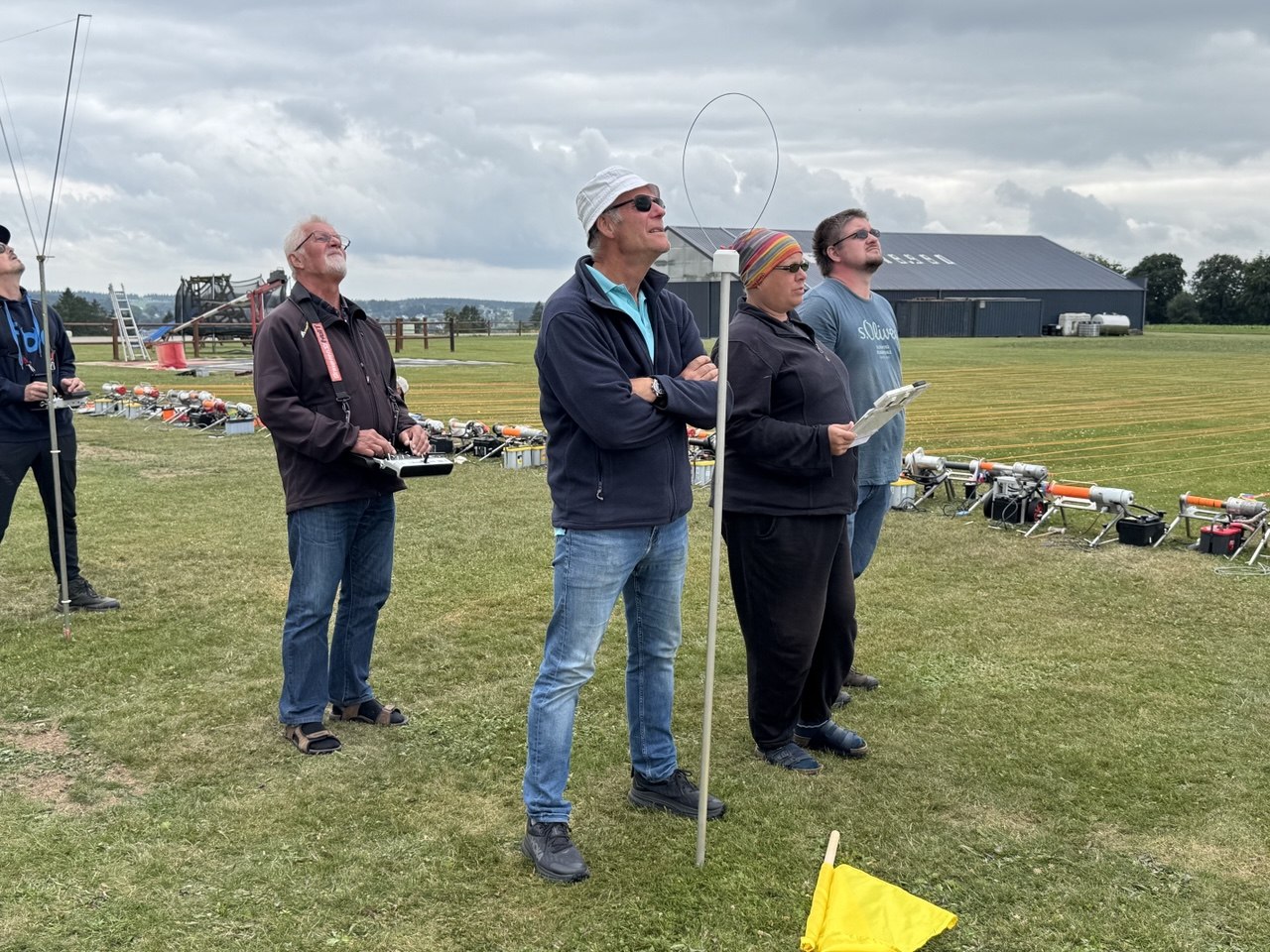
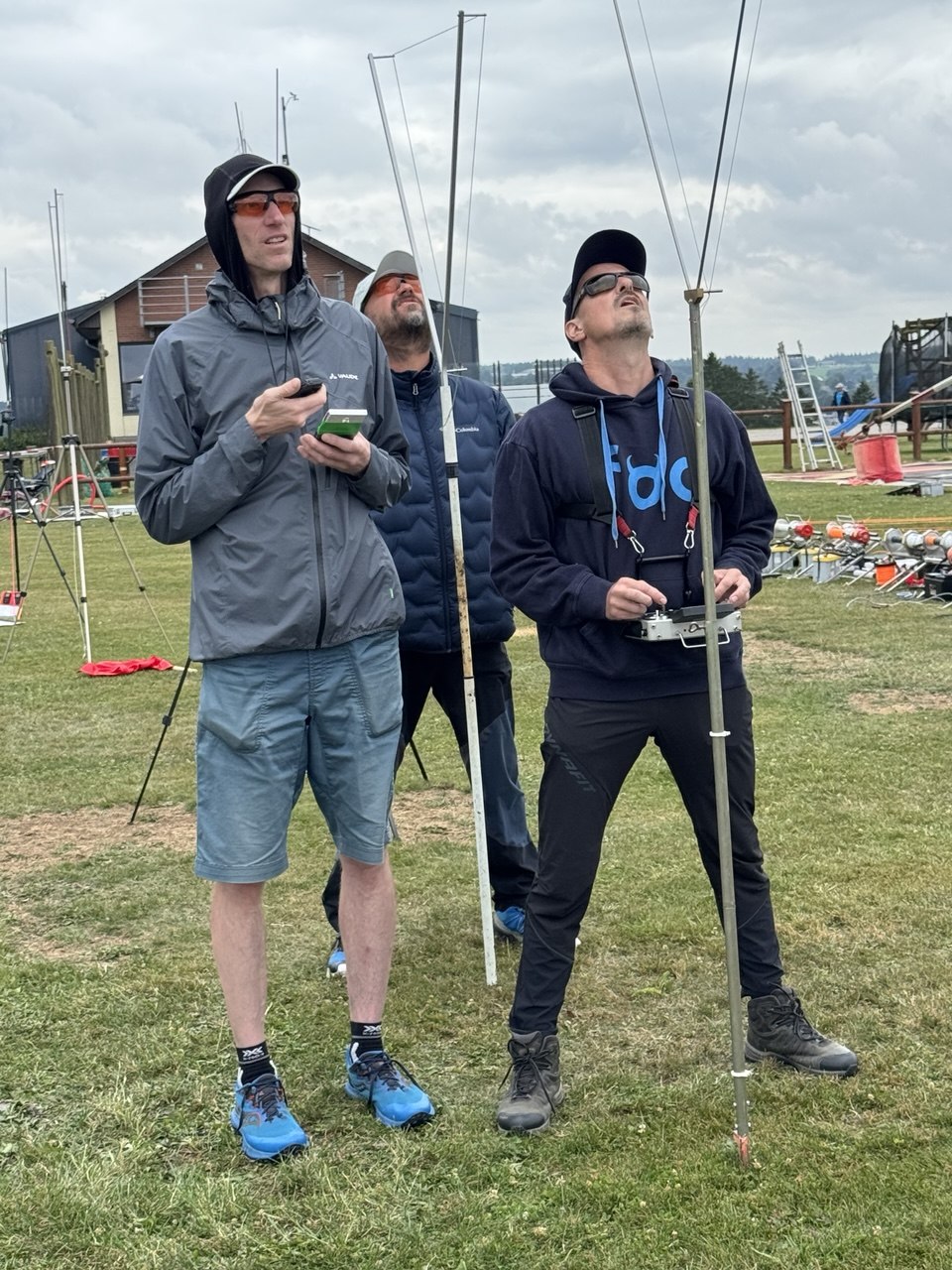
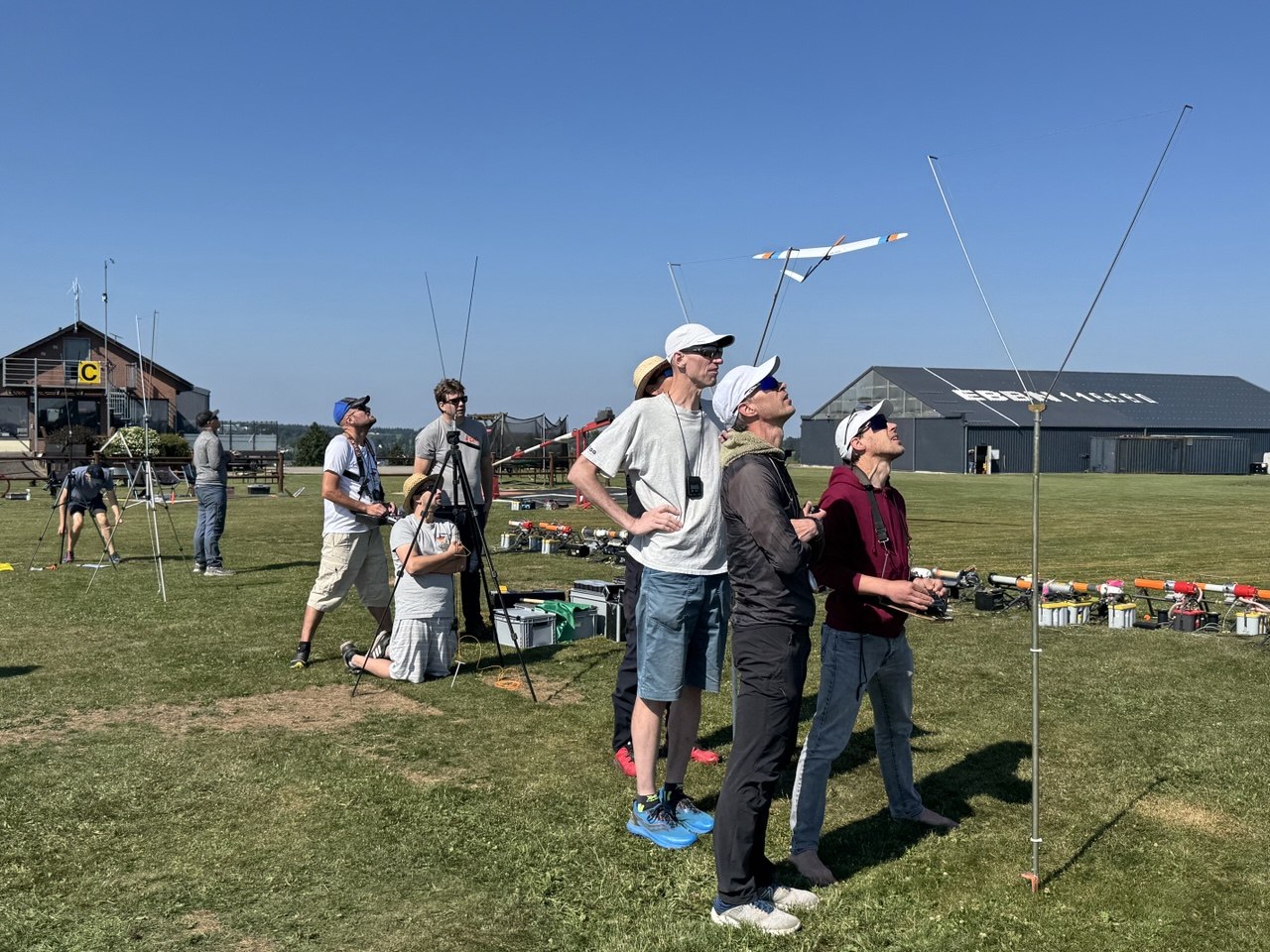
At the F3B competition site in Büllingen, Belgium, the setup was flown with two aircraft in the air at once. The pilots and helpers — Markus, Thilo, and Steffen — were happy with the accuracy, the low delay, and the handling. They thought it might even be usable in speed as well, but that is no priority for now! A few things still need work, like the antennas, good ergonomics, volume of the beepers, but as a first run it held up very well.
I’ve been testing this in the field for only a short time yet, but it is already working well. If this gets even one more club running contests with a smaller crew, or gets one more pilot out practicing on a day they’d otherwise have skipped, it’s done its job. Next up: the next integrated PCB edition, with an even smaller footprint and higher reliability and usability. Testing will continue, and hopefully it’s ready to deploy at F3B Söhl. After that competition I want to make the hardware and software publicly available.
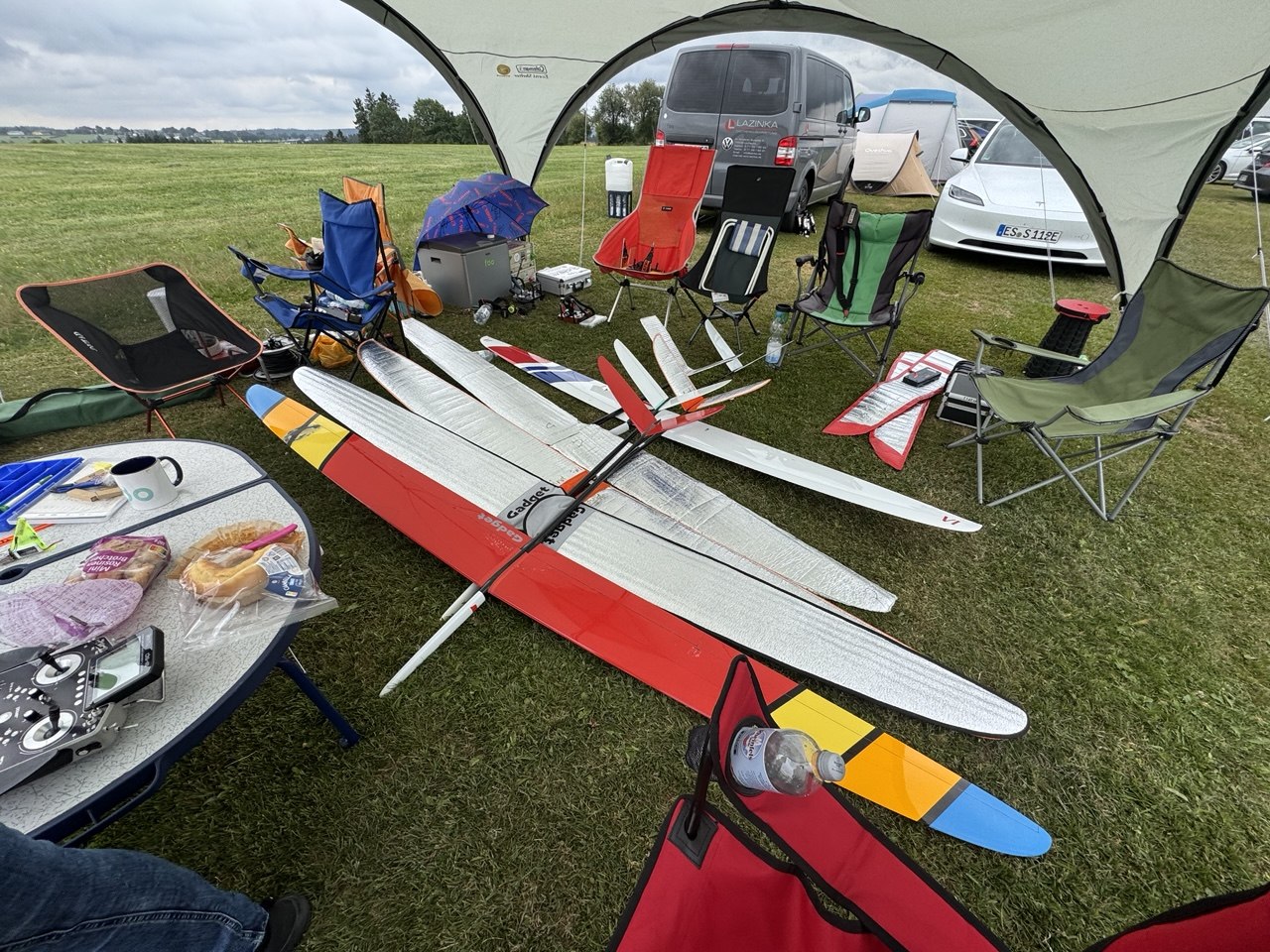
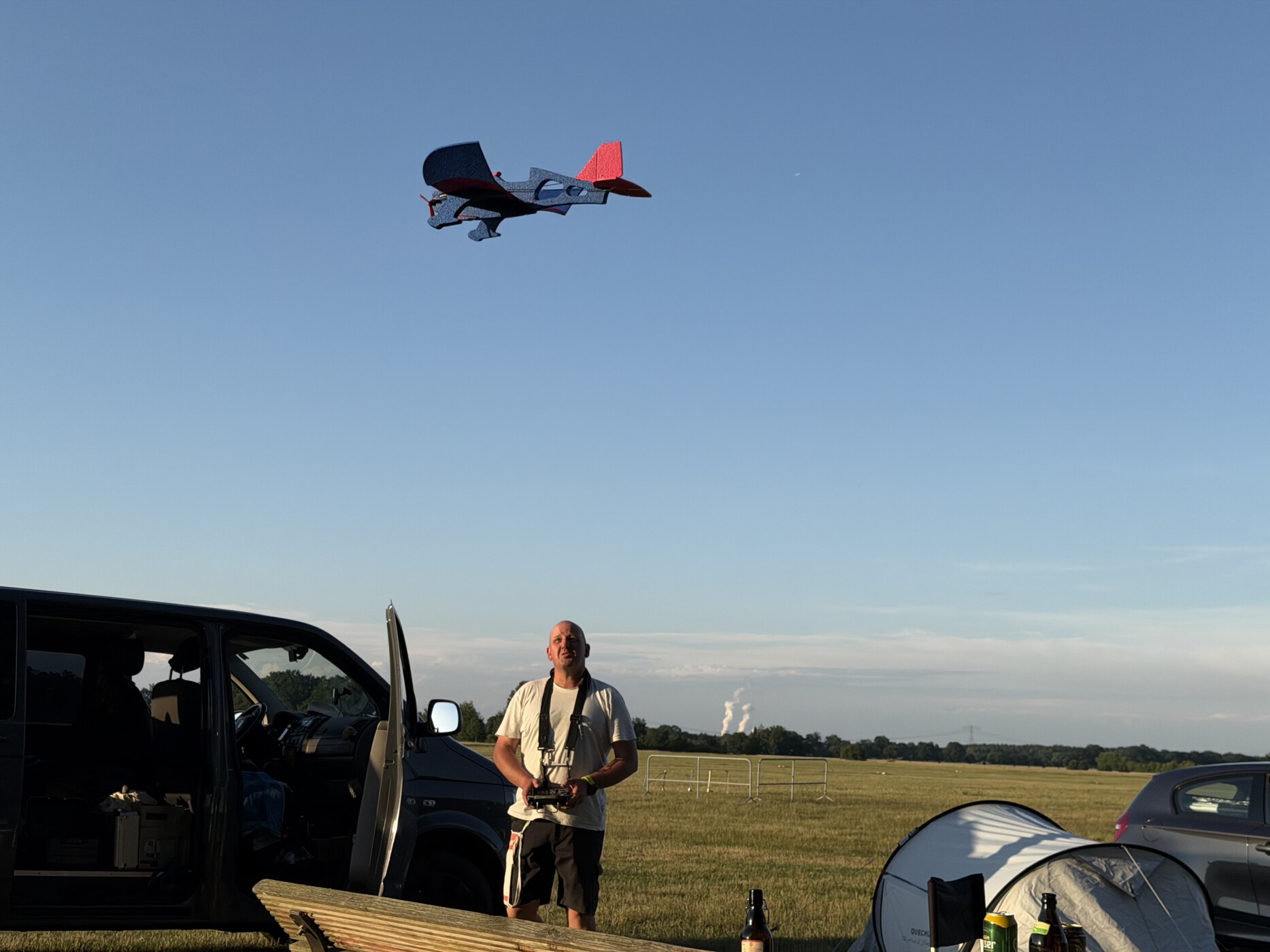
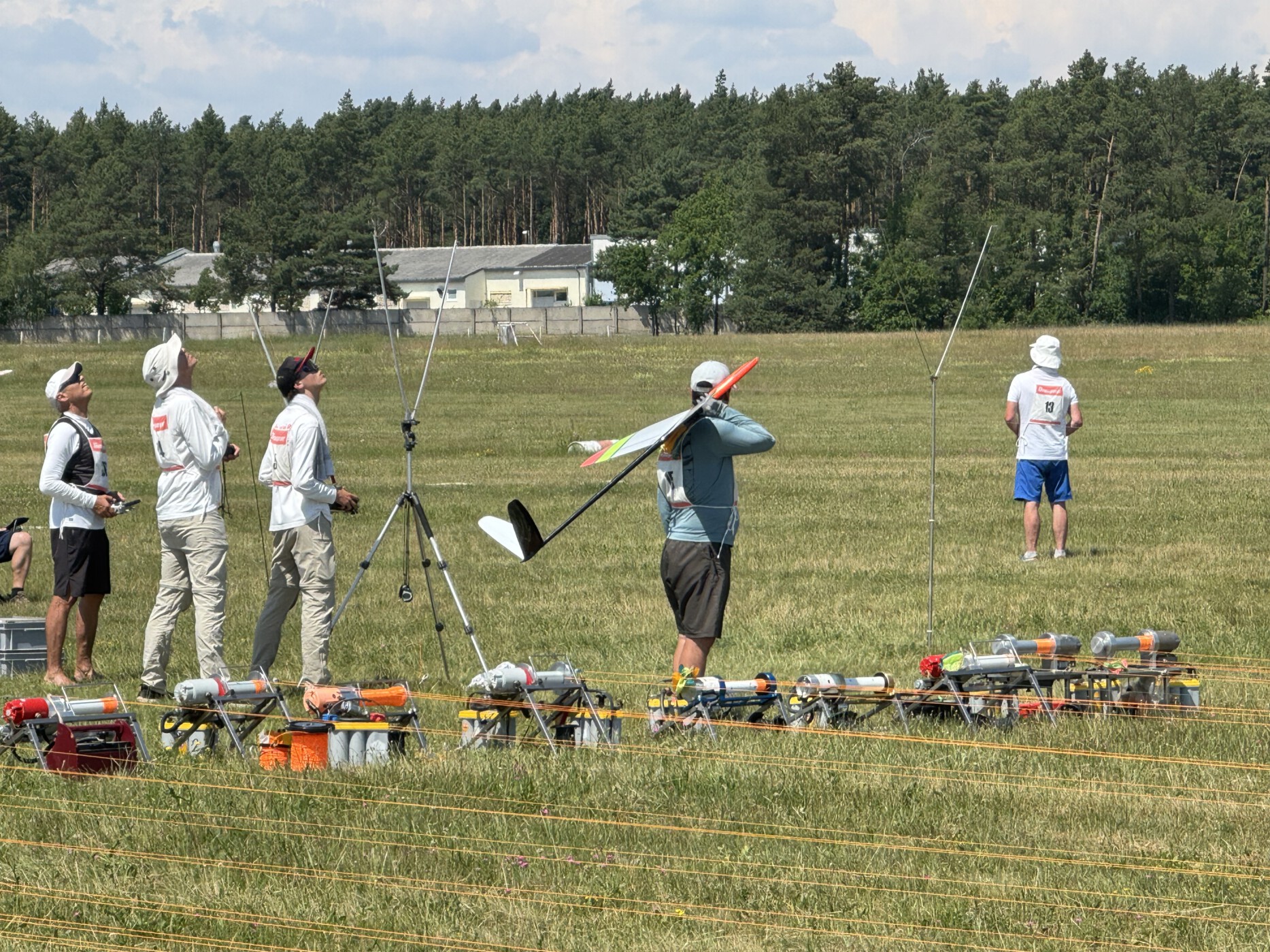
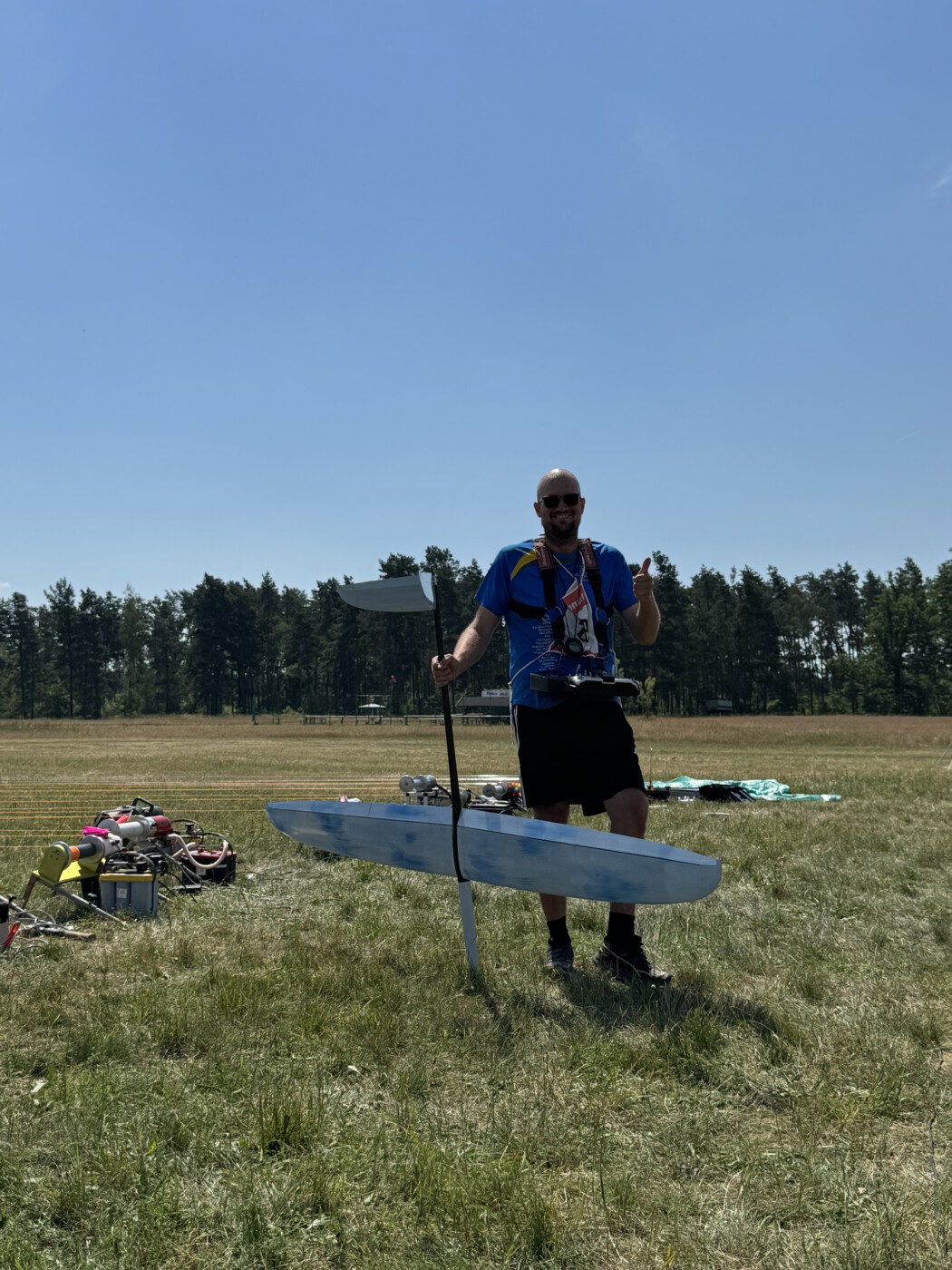
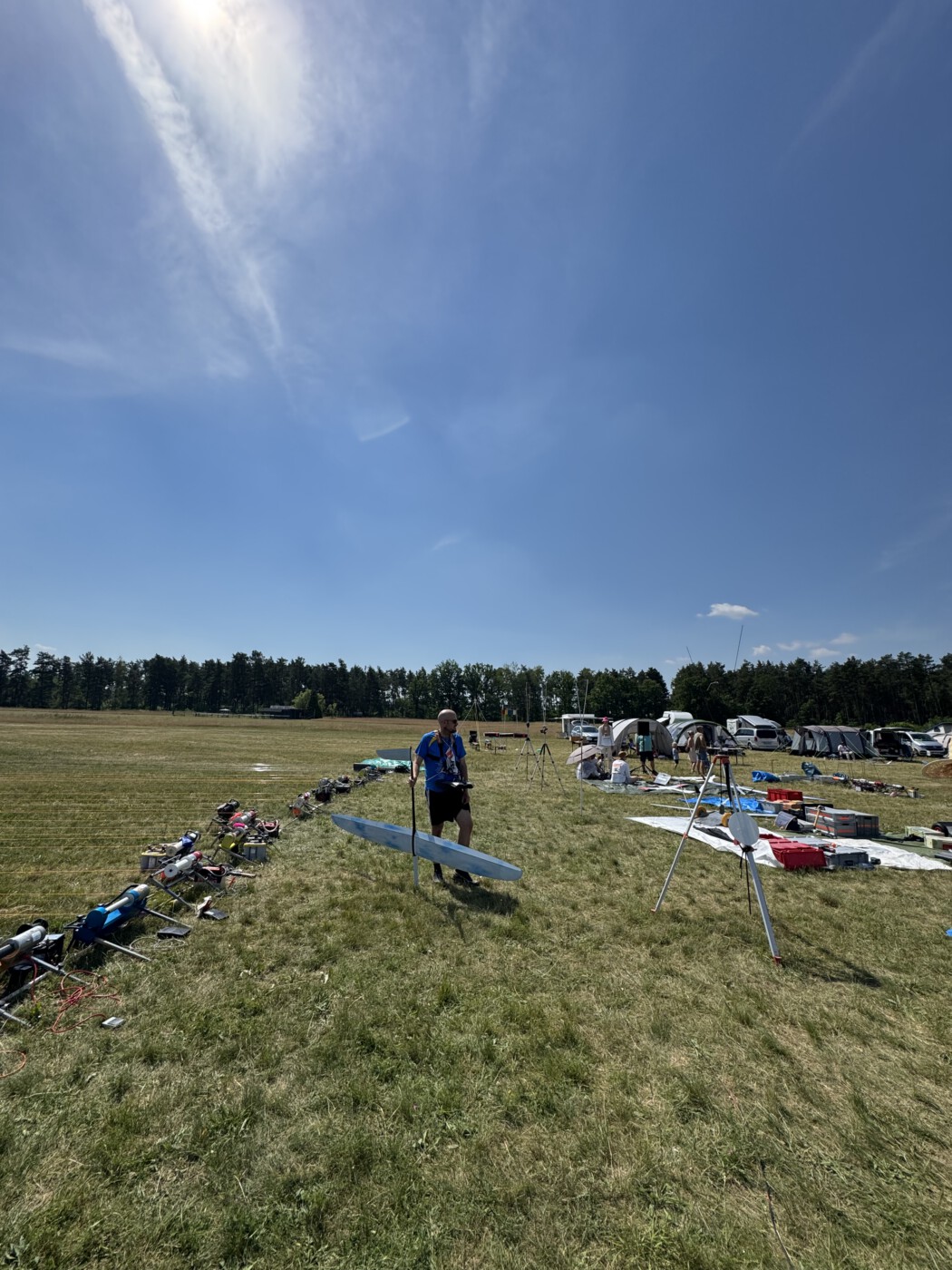
The picture show the flown prototypes. Please be aware that this were only prototypes with hardware i had lying around anyway.
The next version will be much smaller and better to mount onto the aircraft!
(More technical details below, only for the interested!)
Update 1: To clarify, all hardware will be provided by the competition,. As a pilot you do NOT have to buy anything! Just mount the module before your flight and fly…
Follow along here on the blog for updates. Fly more, judge less.

A quick note on scope first: F3Cross is not designed to judge the speed task in competition, for now. At the speeds and g-loads of a speed run, the precision demands go up sharply — that’s a harder problem, and one I’d rather solve properly than rush. Today it’s built for distance-task line crossings and for training, where it’s already a clear upgrade over the realistic alternative: nobody watching at all.
The whole thing is built from cheap, widely available hobbyist electronics — a small ESP32-based microcontroller board, a LORA transceiver, and a GPS module. Right now it uses a u-blox M8 GPS, which already gives more than enough precision and update rate to catch a crossing cleanly. A u-blox M10 upgrade is coming soon, bumping the position update rate to 25 Hz and adding support for all satellite constellations (not just GPS) for even better accuracy.
A human judge isn’t perfect, and neither is this. As speeds and g-loads go up, both approaches get less accurate. To keep that error honest rather than hidden, I want to describe some of the caveats that have already been discovered or are still unknown risks.
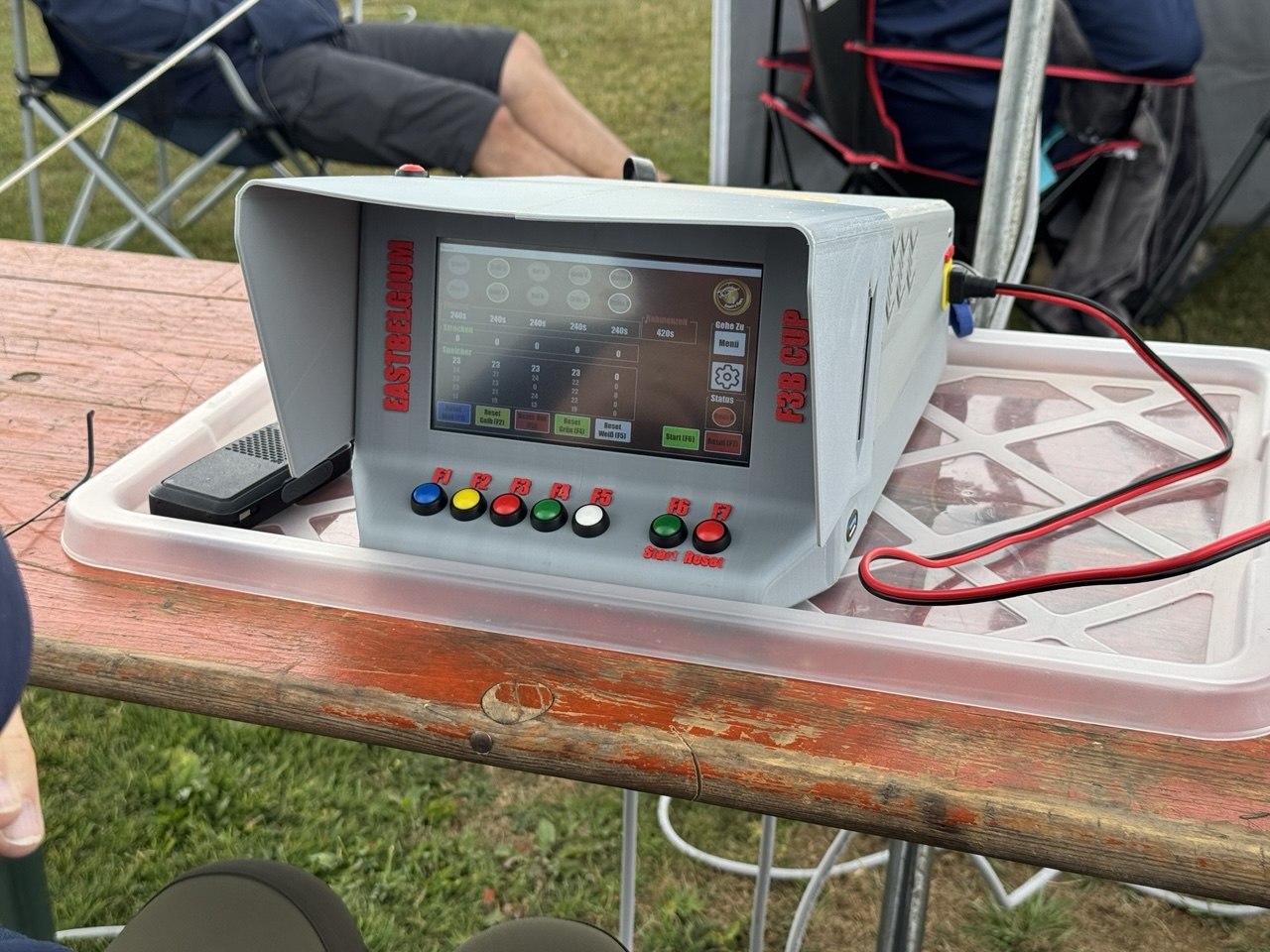
A standalone version that doesn’t need a PC at the ground station is easily doable, and will follow — but only once the current competition setup is proven and running well.
F3Cross will be free to build for your own flying. The exact license is still being worked out, but the plan is: free for personal and competition use, changes and improvements are welcome as long as the original project is credited, and no commercial use without approval. Once it’s ready, the full design — hardware and firmware — will be published so anyone, anywhere, can put one together and start flying with fewer people on the field. If you’d rather not source parts and solder it up yourself, I’m looking at organizing a bulk parts order and possibly pre-soldering for the community for a small fee to cover expenses.
Follow along here on the blog for updates. Fly more, judge less.
______________________________________________________________
F3B ist eine der anspruchsvollsten und interessantesten Disziplinen im RC-Segelflug — Thermikdauerflug, Ziellandungen und ein Speedflug am Limit, der Modell und Pilot alles abverlangt. Aber der Sport hat ein Personalproblem.
Jedes Modell im Streckenflug braucht zwei eigene Wenderichter — einen an Basis A, einen an Basis B — die jeweils auf den exakten Moment achten, in dem ein Teil des Modells ihre Linie überquert. Für eine komplette Runde sind das bis zu einem Dutzend Leute, die allein damit beschäftigt sind. Das ist viel verlangt von den Veranstaltern — und an einem Trainingstag, an dem niemand da ist, fliegt man schlicht blind.
F3Cross löst das. Es ist ein kleines, GPS-basiertes elektronisches System, aktuell in Entwicklung, das die Wenderichter komplett ersetzt — sofort, unermüdlich, günstig.

Das System besteht aus drei Teilen:
Die Bordeinheit kennt die genaue Lage von Basis A und Basis B. In dem Moment, in dem die GPS-Position zeigt, dass das Modell eine dieser Linien überquert hat, löst sie ein Ereignis aus und sendet es drahtlos zum Boden — praktisch verzögerungsfrei, ohne die Reaktionszeit und Subjektivität eines menschlichen Richters. Es funktioniert allein am Trainingstag genauso gut wie bei einem vollen Wettbewerb.
Für die Zuverlässigkeit wird jede Wende gleichzeitig über zwei unabhängige Funkstrecken gesendet. Fällt eine Strecke aus, kommt die andere meist trotzdem durch — eine einzelne Wende geht so seltener verloren.
Das ist kein reines Laborprojekt. In Tests — darunter Flüge mit einem elektrischen F3B — hat das System Modelle bis in 660 m Höhe und 700 m Entfernung verfolgt und dabei weiter Wenden erfasst.
Auf dem F3B-Wettbewerbsgelände in Büllingen, Belgien, wurde mit zwei Modellen gleichzeitig in der Luft geflogen. Die Piloten und Helfer — Markus, Thilo und Steffen — waren zufrieden mit der Genauigkeit, der geringen Verzögerung und dem Handling. Sie hielten es sogar für möglicherweise brauchbar im Speed, aber das hat vorerst keine Priorität! Ein paar Dinge müssen noch verbessert werden, etwa die Antennen, eine gute Befestigung und die Lautstärke der Piepser, aber für einen ersten Durchlauf hat es sich sehr gut geschlagen.
Ich teste das System erst seit kurzer Zeit, aber es funktioniert bereits gut. Wenn dadurch auch nur ein Verein mehr seine Wettbewerbe mit kleiner Crew durchführen kann, oder auch nur ein Pilot mehr zum Üben rausgeht, wenn er sonst zu Hause geblieben wäre, hat es seinen Zweck erfüllt.
Die nächsten Schritte: die nächste integrierte Platinenversion, mit noch kleinerem Formfaktor und höherer Zuverlässigkeit und besserer Bedienbarkeit. Die Tests gehen weiter, und hoffentlich ist es rechtzeitig zum F3B Wettbewerb Söhl einsatzbereit. Nach diesem Wettbewerb möchte ich Hardware und Software öffentlich zugänglich machen.
Die Bilder zeigen die geflogenen Prototypen. Bitte beachtet, dass das nur Prototypen aus Teilen waren, die ich ohnehin herumliegen hatte. Die nächste Version wird deutlich kleiner und besser am Modell zu montieren sein!
(Weitere technische Details unten, nur für Interessierte!)
Folgt hier im Blog für Updates. Fly more, judge less.

Zunächst eine kurze Anmerkung zum Umfang: F3Cross ist vorerst nicht dafür ausgelegt, die Speedaufgabe im Wettbewerb zu bewerten. Bei den Geschwindigkeiten und g-Belastungen eines Speedflugs steigen die Präzisionsanforderungen stark an — das ist ein schwierigeres Problem, und eines, das ich lieber sauber lösen als überstürzen möchte. Erstmal ist es für die Wenden der Streckenaufgabe und fürs Training gebaut, wo es der realistischen Alternative — nämlich niemandem, der zuschaut — schon jetzt klar überlegen ist.
Das Ganze besteht aus günstiger, breit verfügbarer Hobbyelektronik — einem kleinen ESP32-basierten Mikrocontrollerboard, einem LoRa-Transceiver und einem GPS-Modul. Aktuell kommt ein u-blox M8 GPS zum Einsatz, das schon mehr als genug Präzision und Updaterate bietet, um eine Wende sauber zu erfassen. Ein Upgrade auf das u-blox M10 folgt bald und hebt die Positions-Updaterate auf bis zu 25 Hz an, bei gleichzeitiger Unterstützung für alle Satellitenkonstellationen (nicht nur GPS) für noch bessere Genauigkeit.
Ich werde versuchen, den finalen Prototyp schwerpunktneutral zu gestalten, was ihn etwas länger macht, dafür aber keine Trimmgewichte im Rumpf erfordert. Die Antennen werden hinter der Fläche sitzen, um die Gierdämpfung nicht zu verringern und nicht vom CFK der Fläche abgeschattet zu werden.
Ein menschlicher Richter ist nicht perfekt, und dieses System ist es auch nicht. Mit steigenden Geschwindigkeiten und g-Belastungen werden beide Ansätze ungenauer. Damit dieser Fehler offen kommuniziert ist und nicht versteckt wird, möchte ich einige der Einschränkungen beschreiben, die bereits entdeckt wurden und noch unbekannte Risiken darstellen.
Eine eigenständige Version, die an der Bodenstation keinen PC braucht (fürs Training), ist problemlos machbar und wird folgen — aber erst, wenn der aktuelle Wettbewerbsaufbau erprobt ist und zuverlässig läuft.
F3Cross wird für den eigenen Flugbetrieb frei nachbaubar sein. Die genaue Lizenz wird noch ausgearbeitet, aber der Plan ist: frei für den privaten Gebrauch und für Wettbewerbe. Änderungen und Verbesserungen sind willkommen, solange das Originalprojekt genannt wird. Keine kommerzielle Nutzung ohne Genehmigung. Sobald es fertig ist, wird das komplette Design — Hardware und Software— veröffentlicht, damit jeder, überall, sich eines zusammenbauen und mit weniger Leuten auf dem Platz fliegen kann. Wer Teile nicht selbst beschaffen und löten möchte: Ich prüfe, ob sich eine Sammelbestellung organisieren lässt, eventuell mit Löten der SMD teilew für die Community gegen eine kleine Gebühr zur Deckung der Unkosten.
Update 1: Zum Klarstellen: die Hardware wird vom Wettbewerb zur verfügung gestellt. Die Piloten müssen nichts dafür vorher kaufen! Einfach das Modul vor dem Streckenflug am Flieger befestigen und Spaß haben…
Folgt hier im Blog für Updates. Fly more, judge less.
Live results: https://www.f3xvault.com/?action=event&function=event_view&event_id=4412&tab=
Sun 7:30
we finished with duration yesterday. Roughly every second group had astronomical flight altitudes. The groups in between struggled to reach 7min flight time.
Today we have very low clouds and will have to delay the start of the competition.
16:40
second speed with much more wind is completed. Heavy aircraft and thick lines that still break occasionally.
unfortunately some damaged aircraft in the Gusty ground level.
duration afterwards with similar conditions. It is difficult to decide if you want to fly far away or directly overhead. Since only one side (lee) is allowed to fly, the timing gets even much more important than the side or distance. From the base.
12:20
we started with duration. Very calm weather, so basically just gliding at reduced sink.
Distance had changing conditions. Even within the working time!
now speed. Also thermals coming through every 4-5 minutes making the ballast decision tricky
Tuesday 23.6.
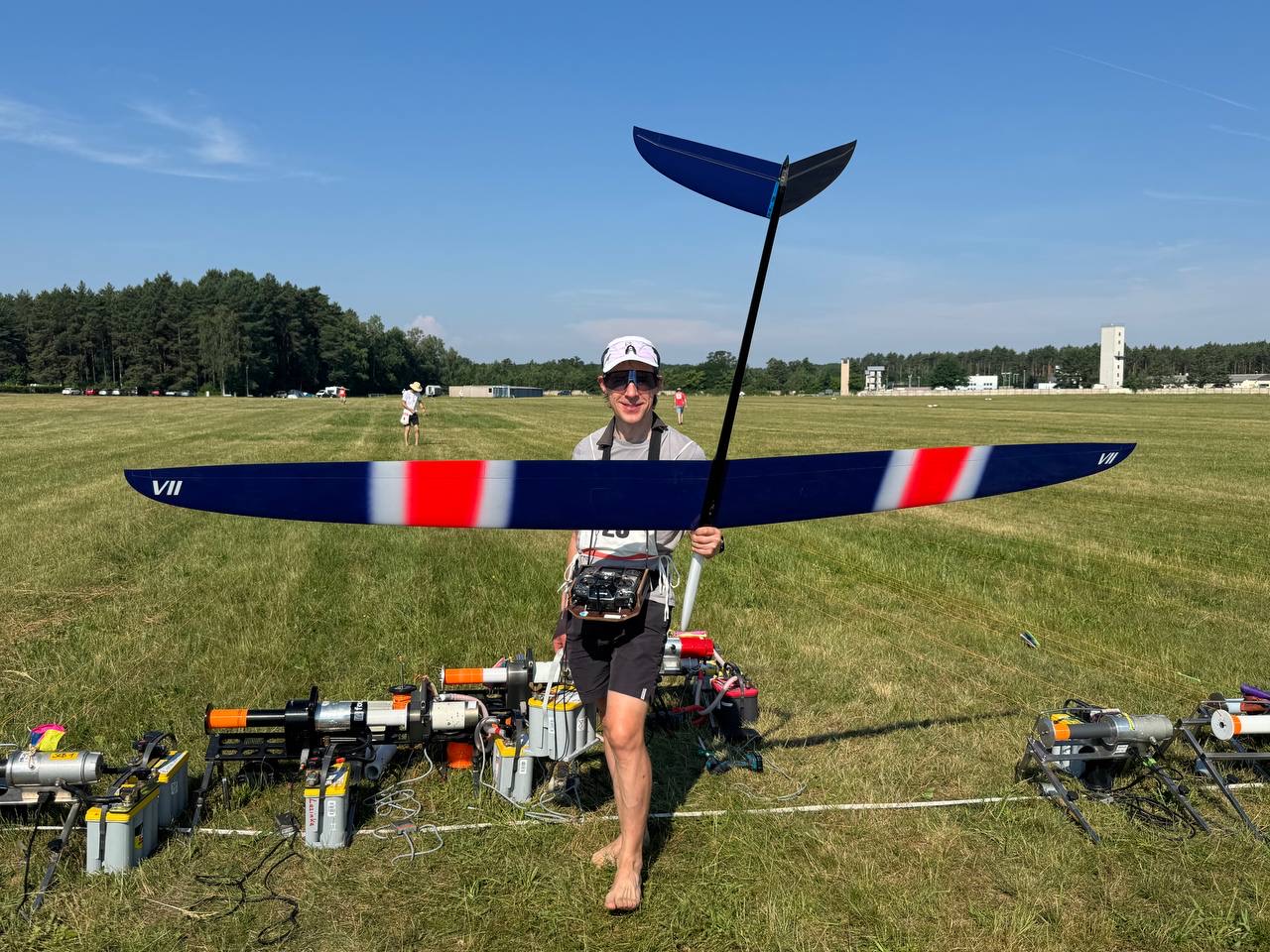
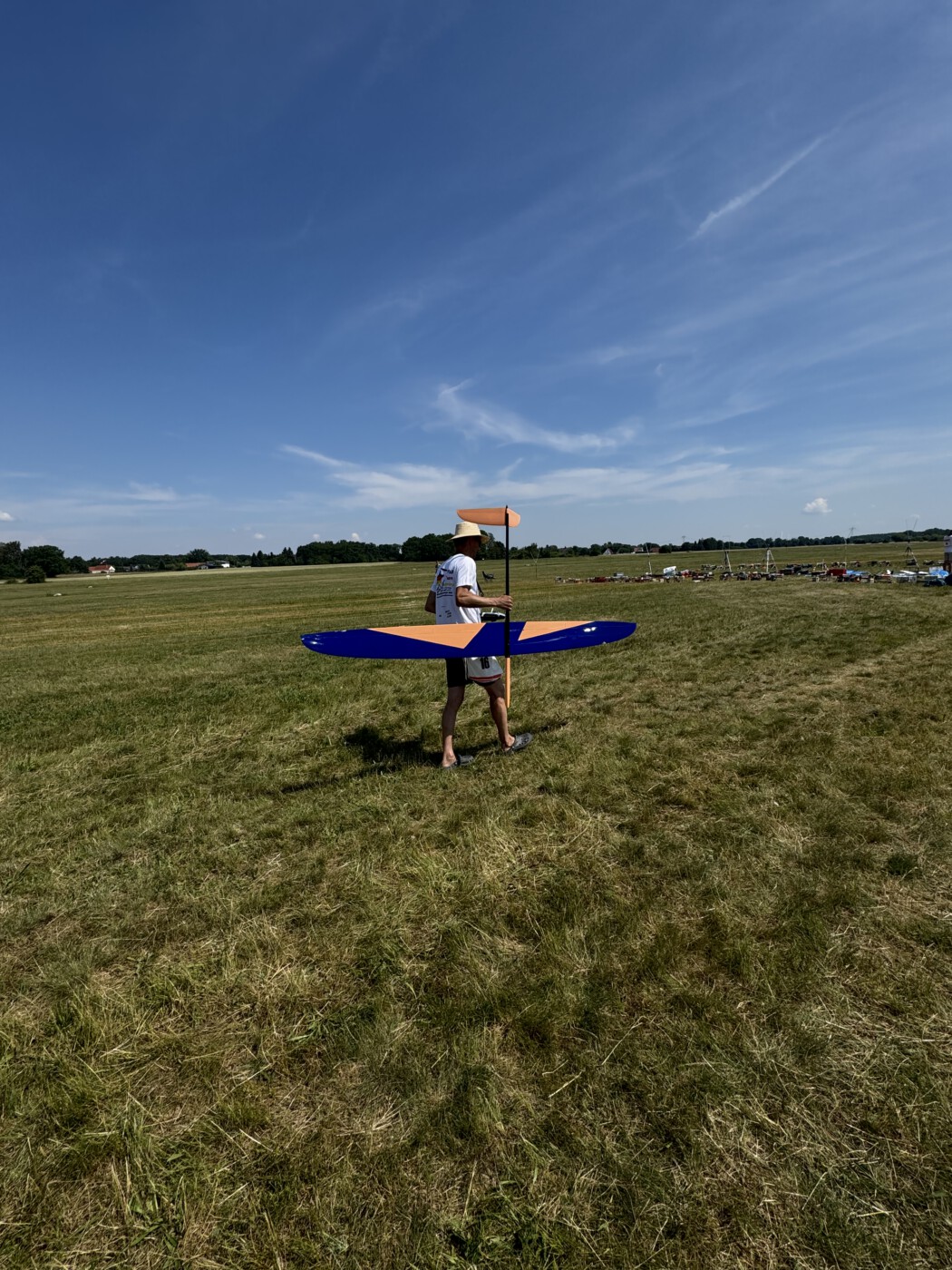
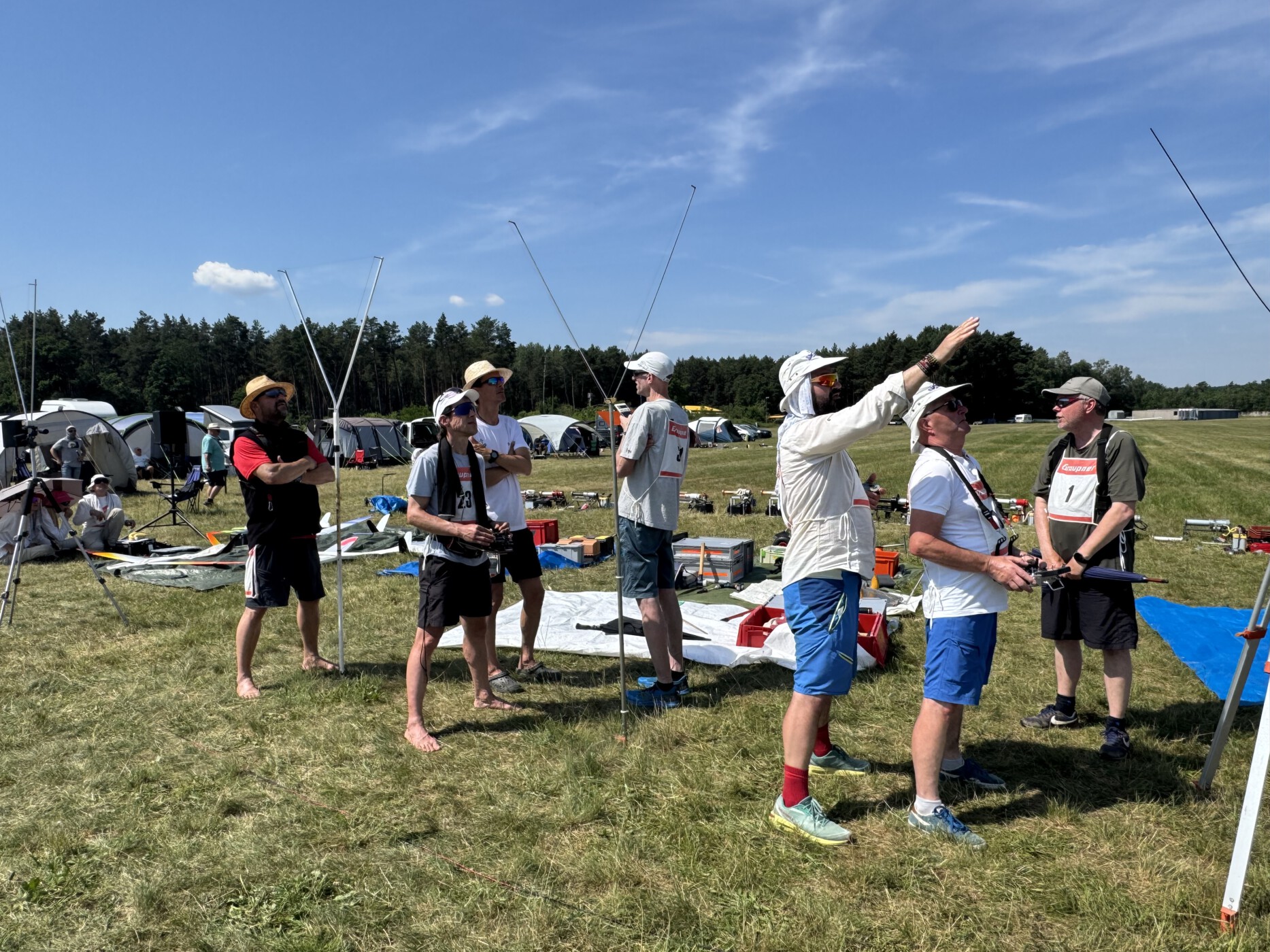
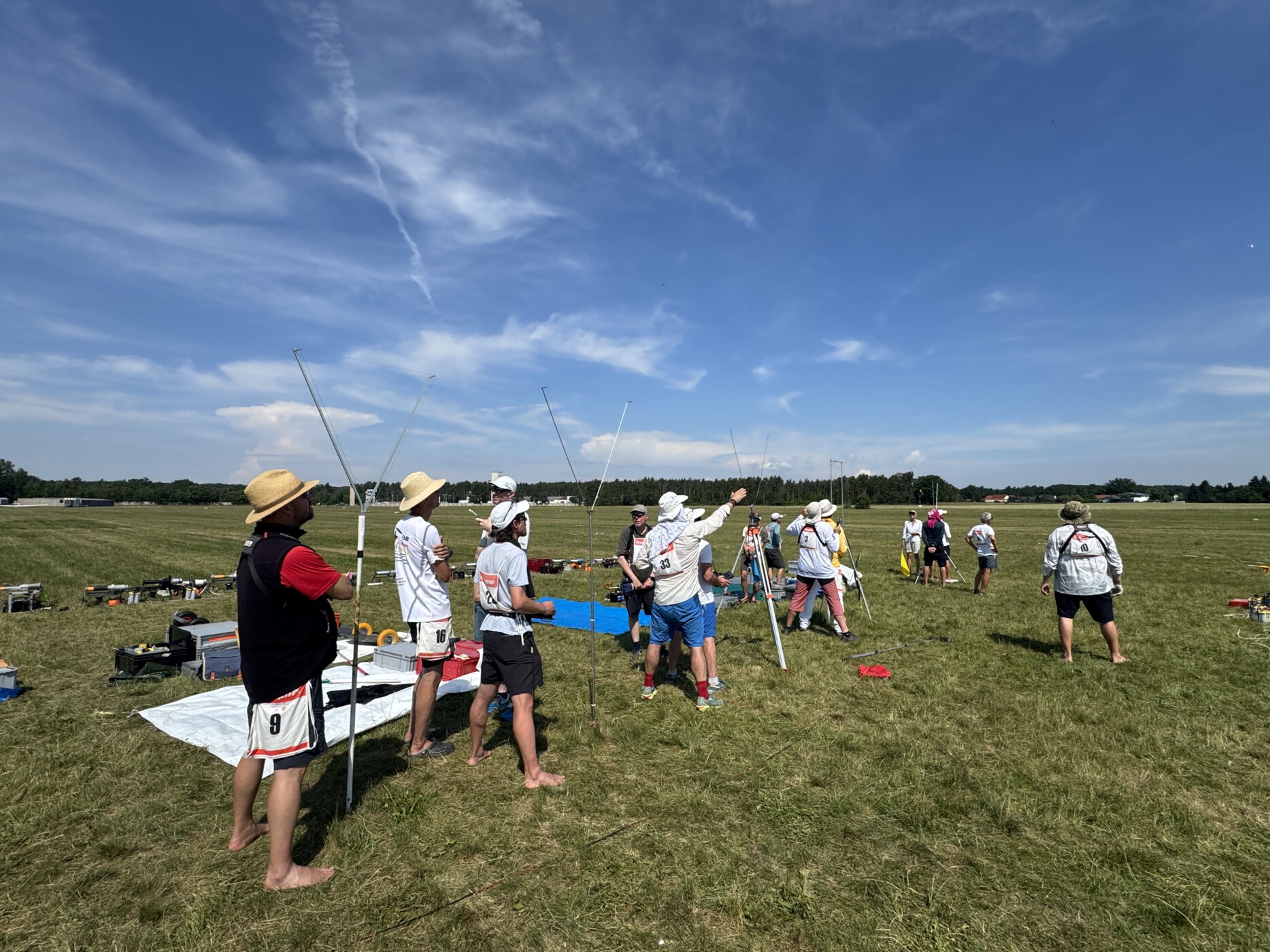
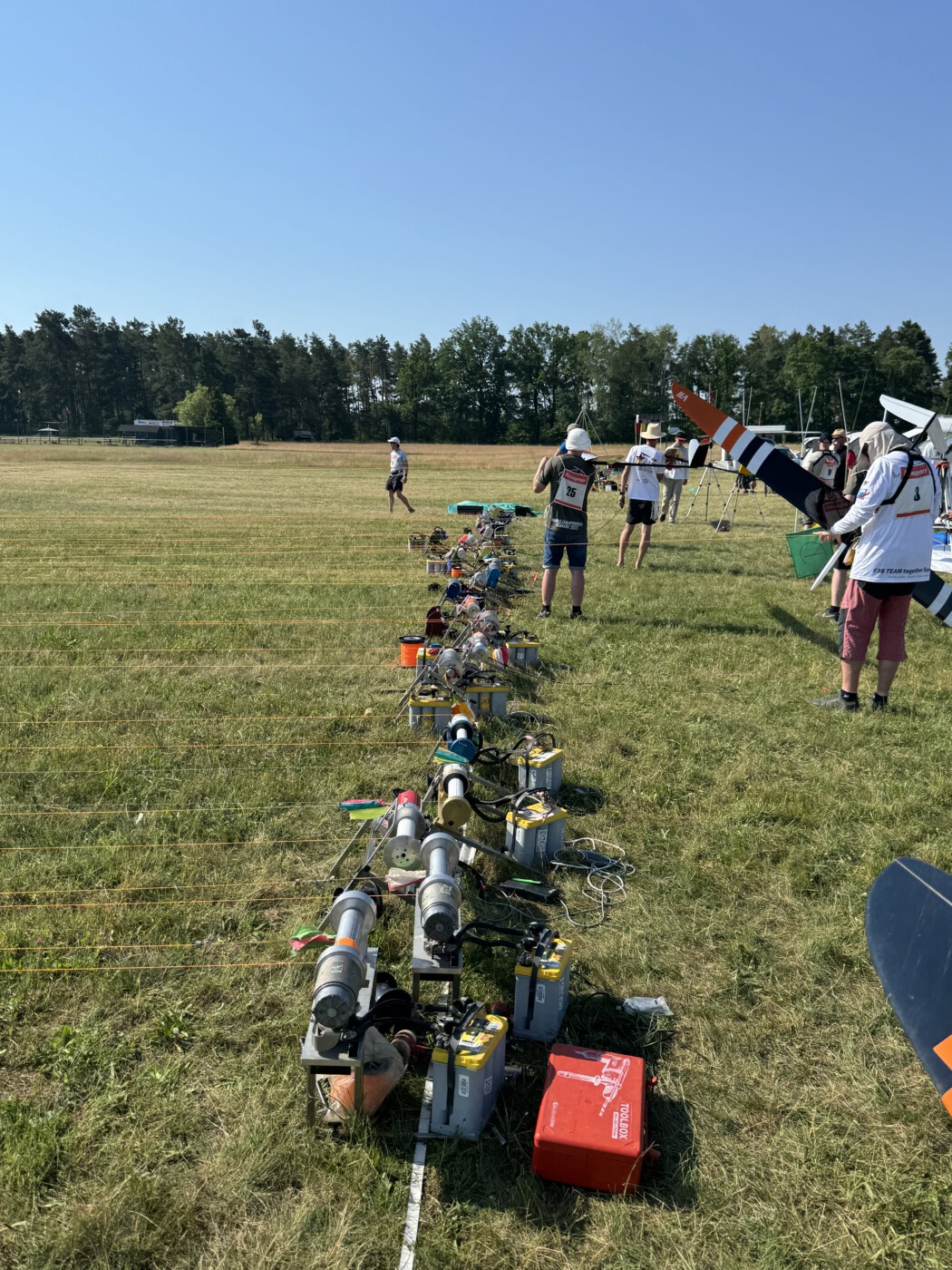
What an incredible weekend. The organisation was, as always, spot on — the experience built into this event really shows. And the weather delivered too: classic Nardt conditions, meaning the year’s first real heat wave arrived right on cue. Occasional gusts of wind were a welcome relief, a noticeable improvement over last year’s World Championship.
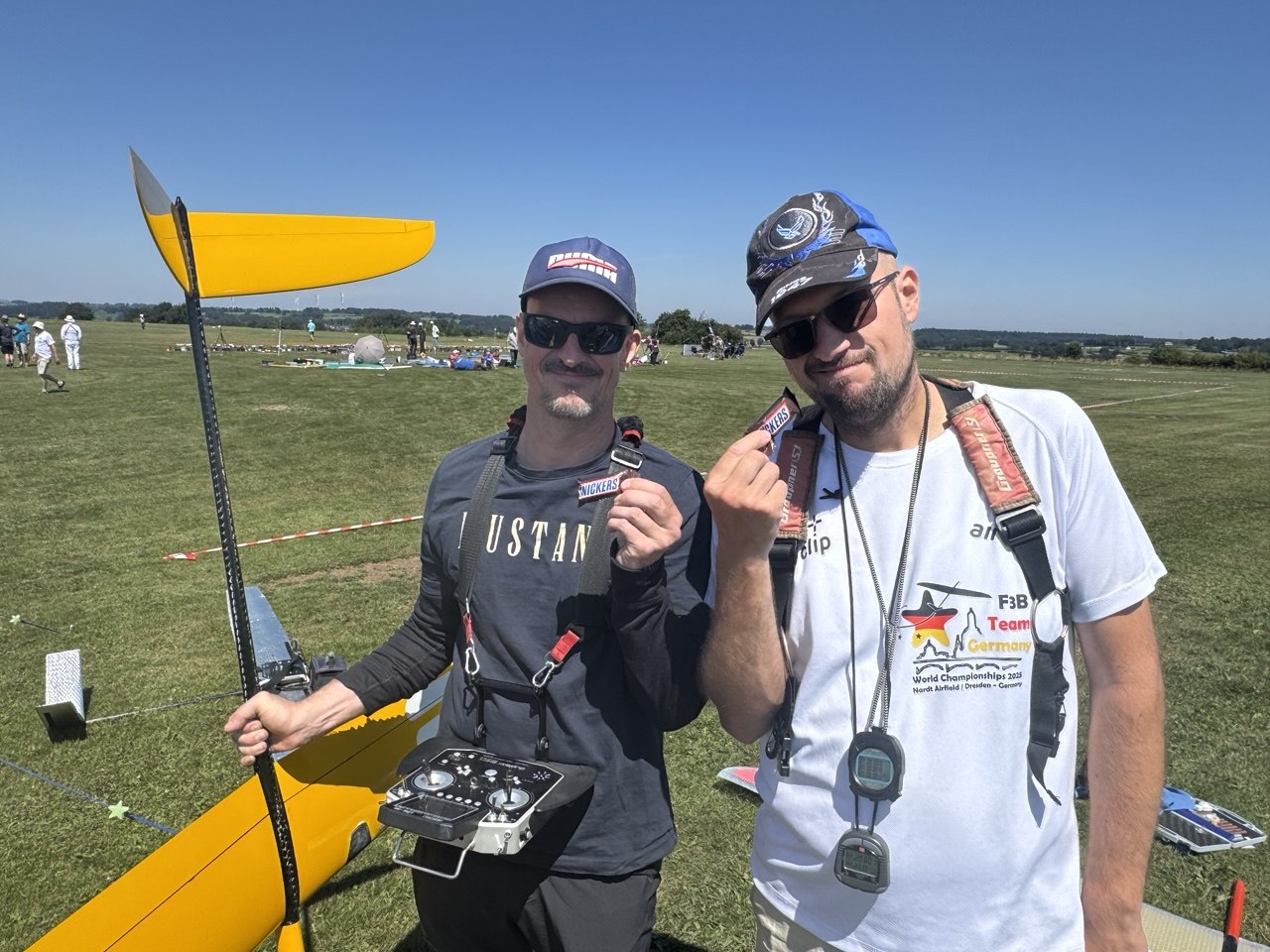
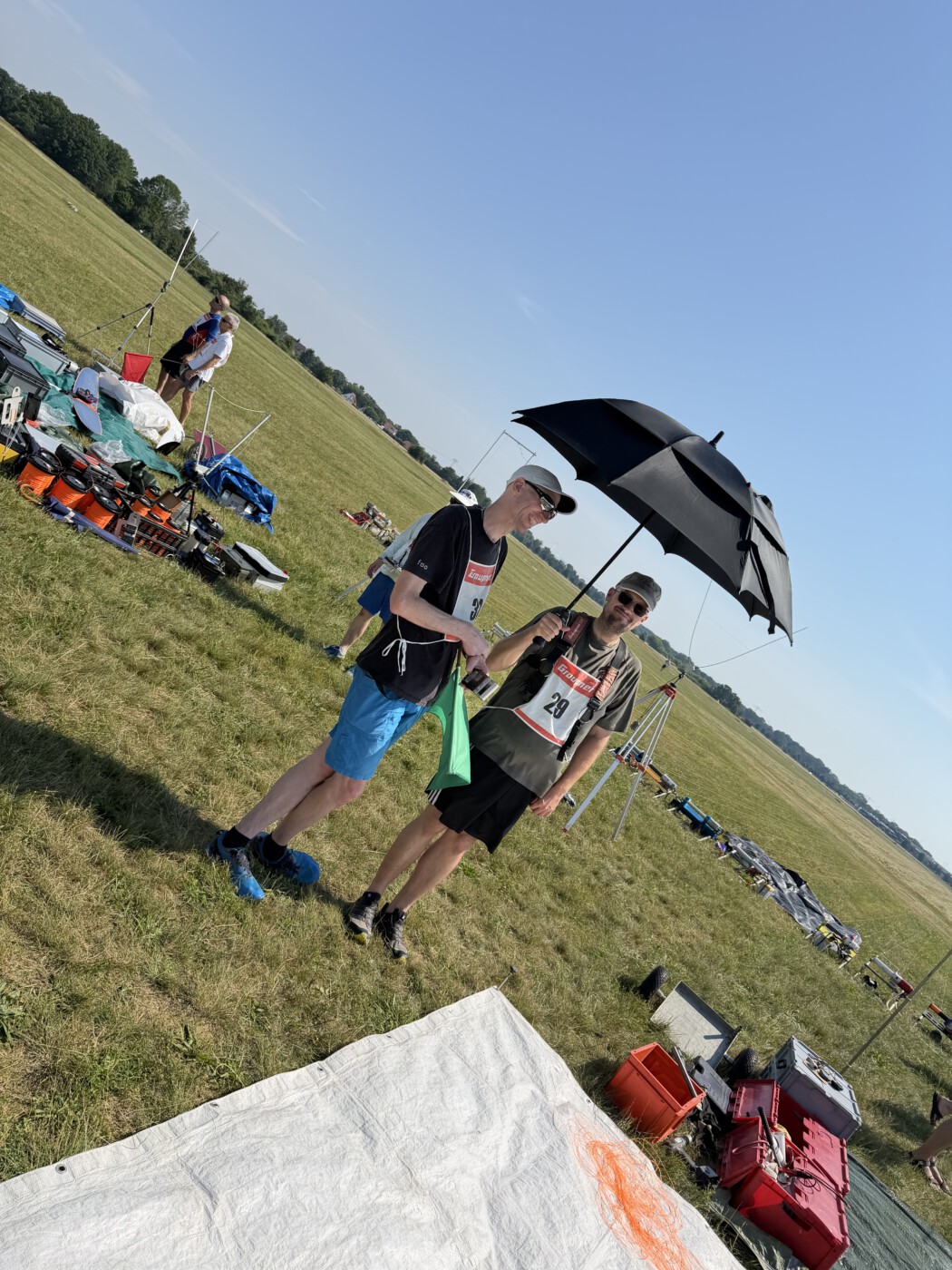
Both days brought constant shifts in wind strength and direction, and at Team Foo we were caught a little off-guard on Sunday. Flying in 10-knot wind on 1.18mm line is a serious challenge — but Steffen rose to it and somehow kept the line in one piece. Others faced different challenges, courtesy of the „good times“ rolling later and later into Saturday night at the Bergfest. 😄 That’s also your hint that the Nardt airfield once again delivered exceptional catering — food and drinks on point all weekend.
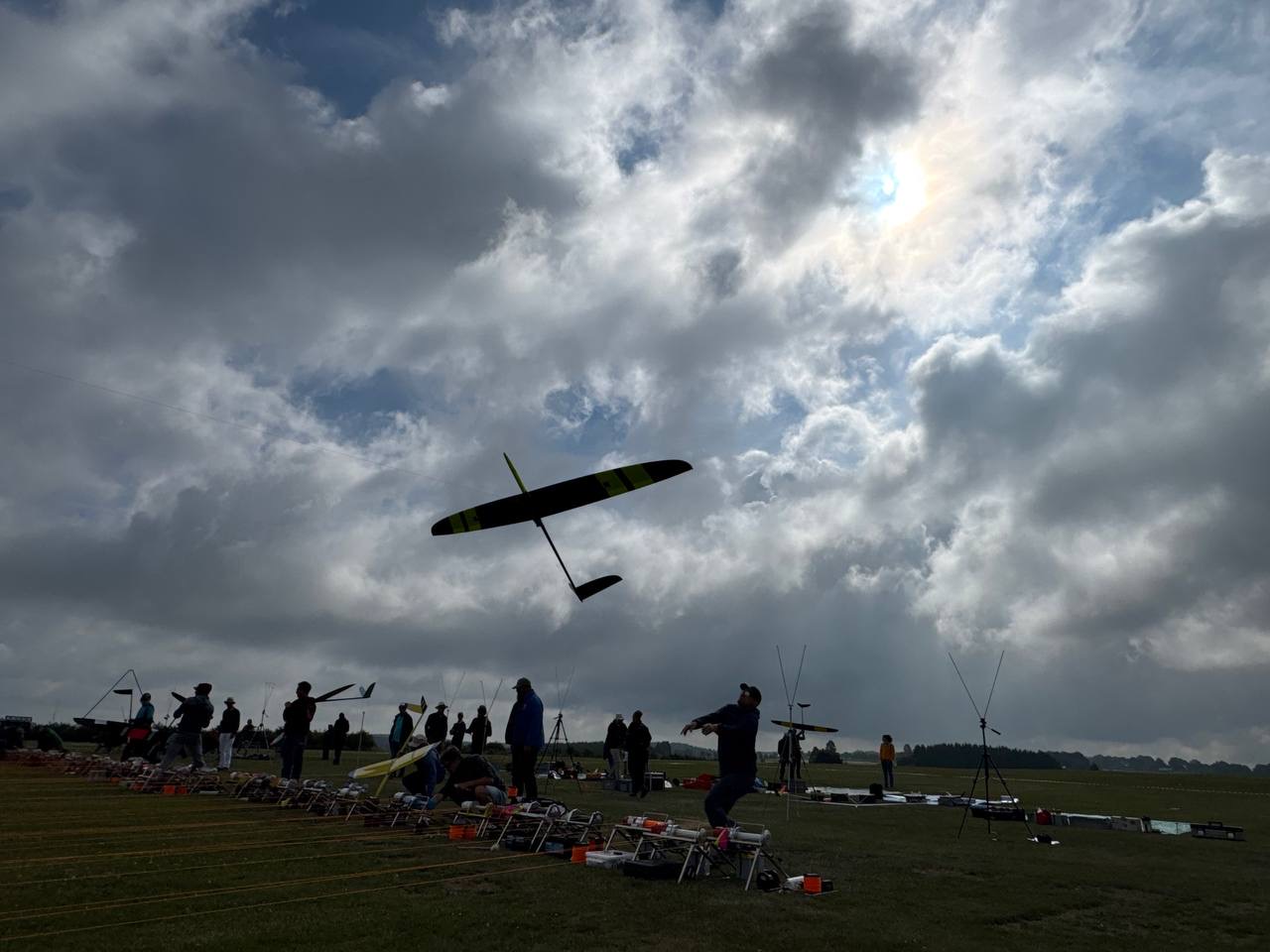
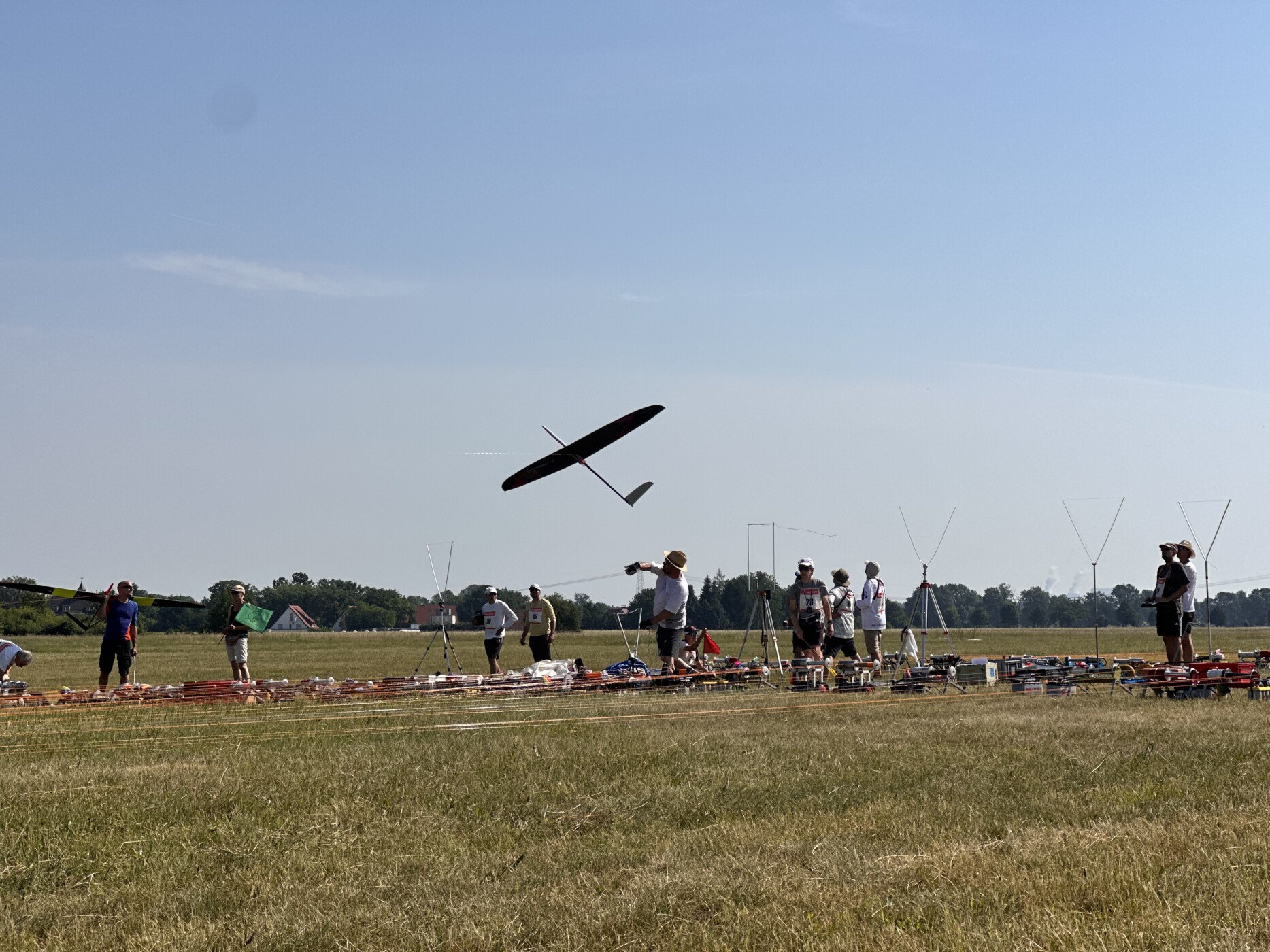
The flying was pure Nardt: unpredictable, always changing, and challenging. Duration caught some pilots out, but distance was where most of the real battles were fought — especially on Sunday. Thermals built up fast and were hard to centre. If you found a strong one on your distance run, you had a decisive edge that most competitors simply couldn’t match. Speed rounds were mostly light-wind and heavy air, with the exception of the second half of Speed 4 on Sunday when the strong gusts rolled in.
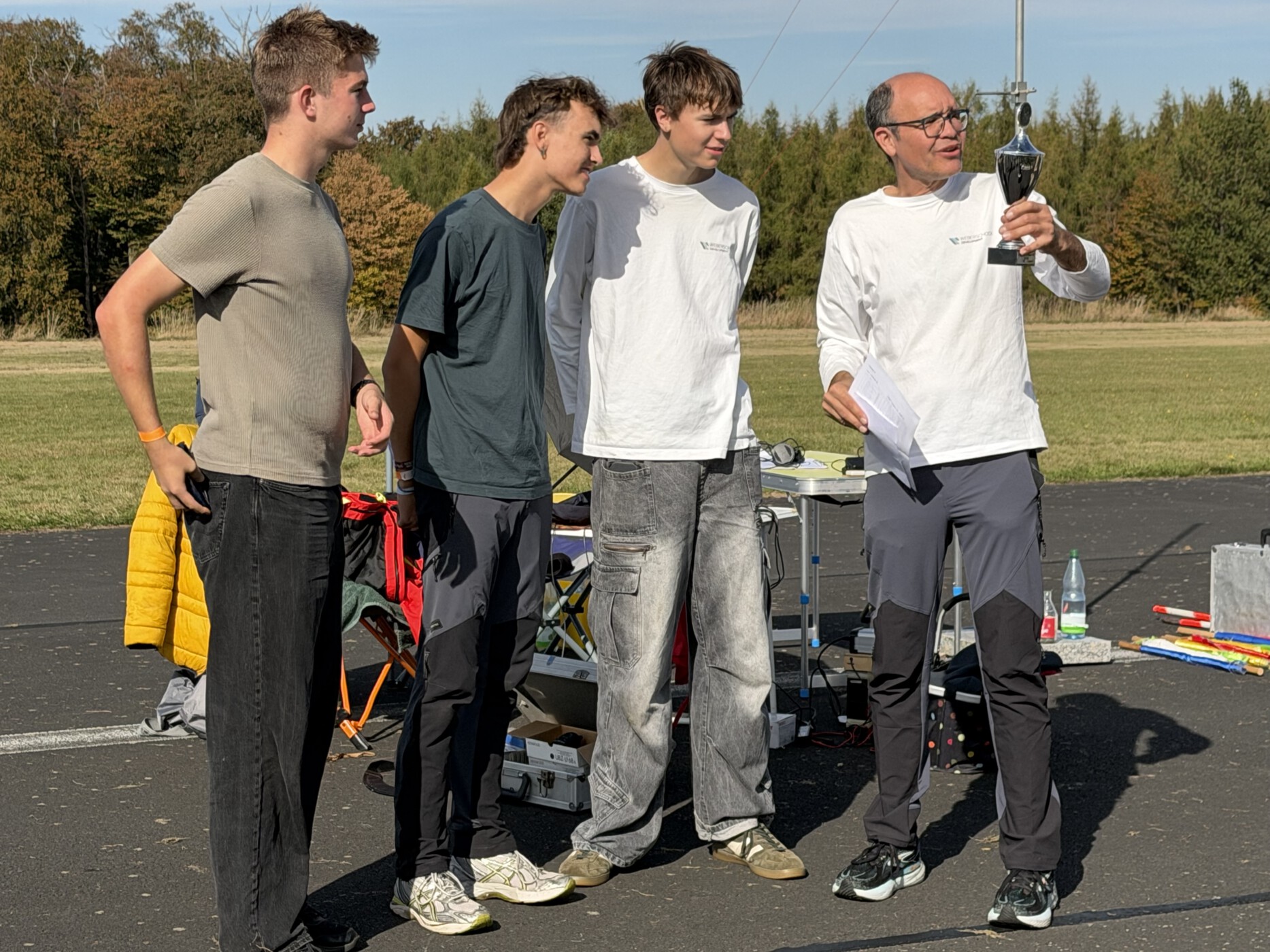
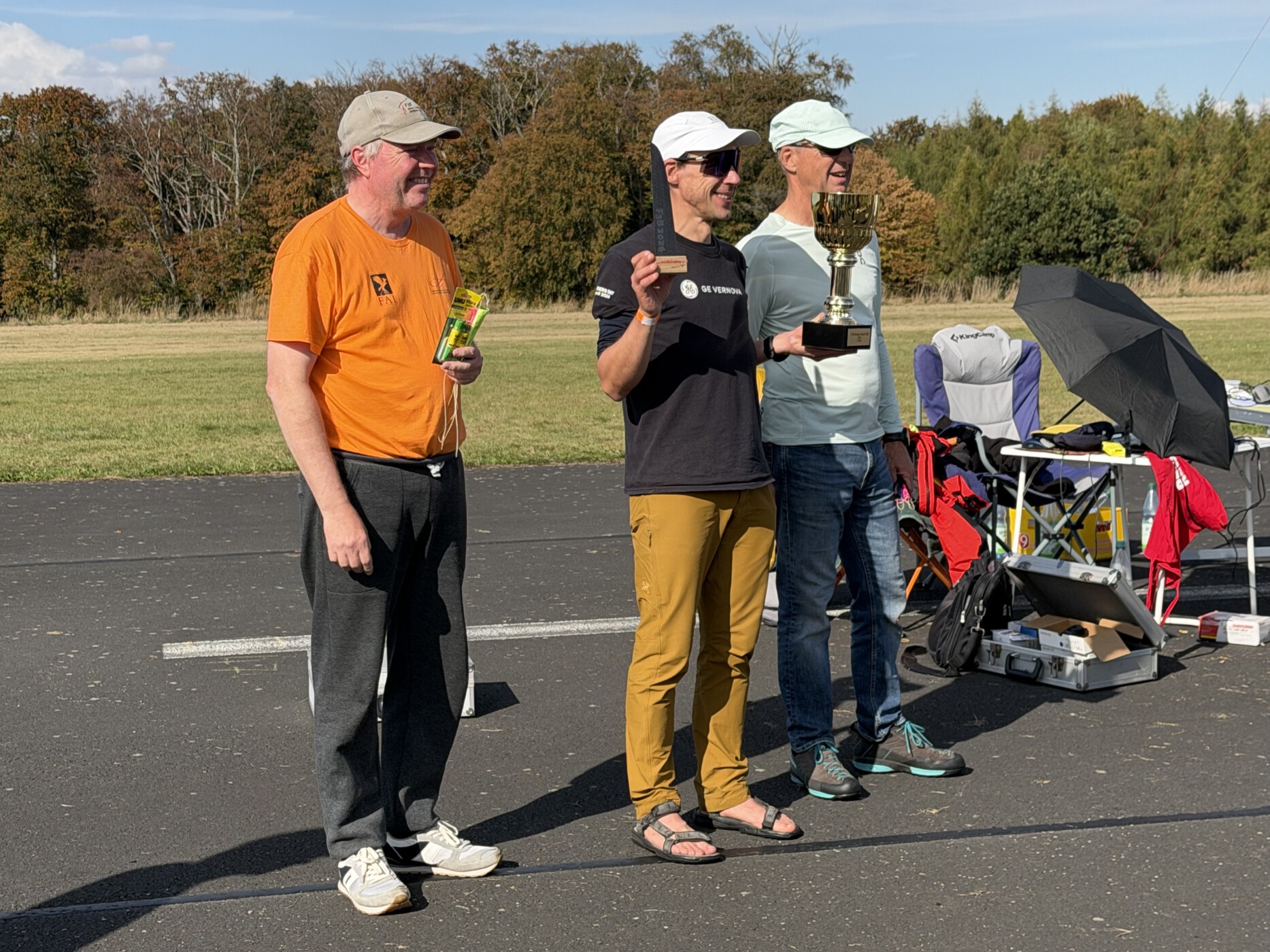
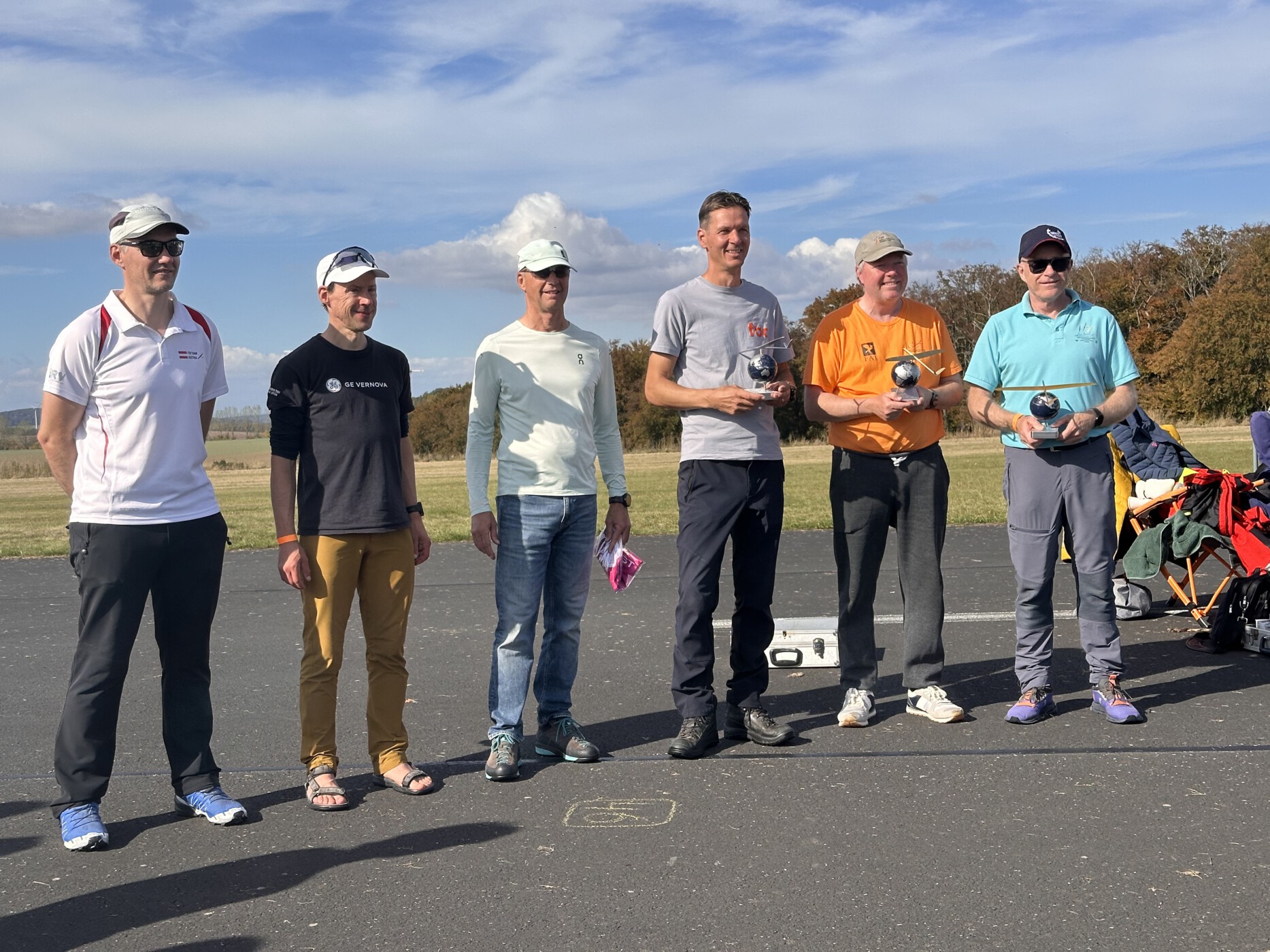
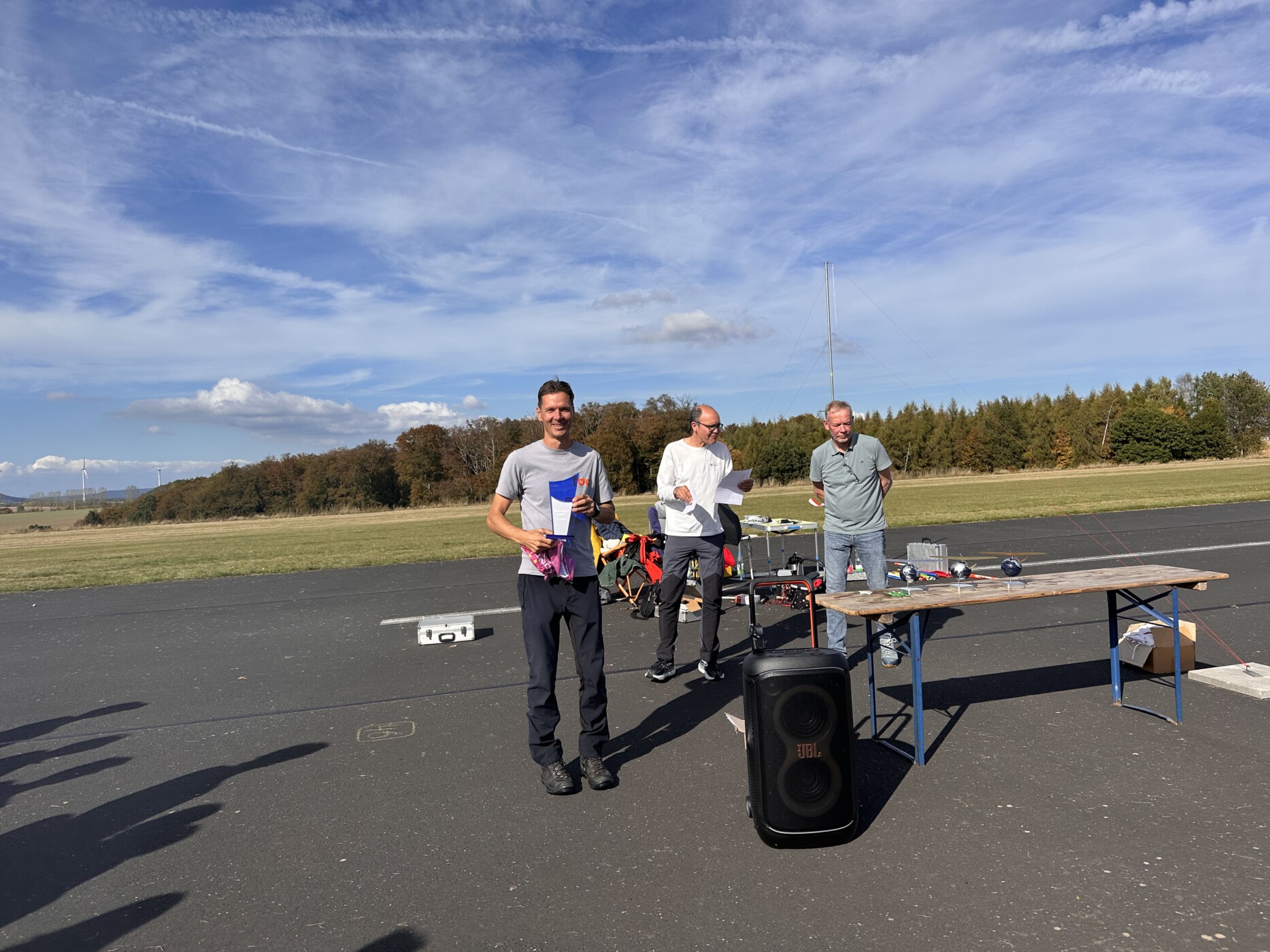
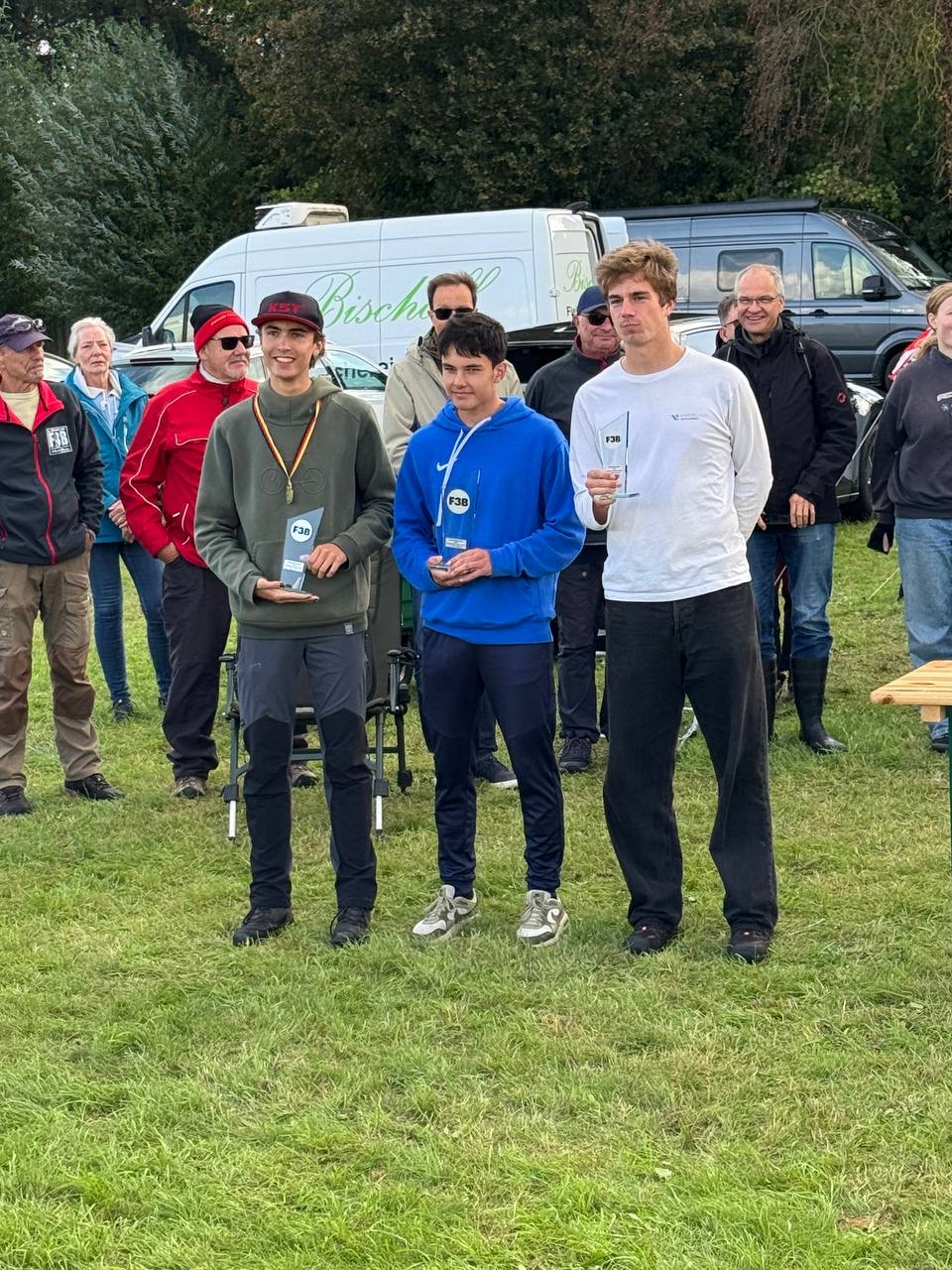
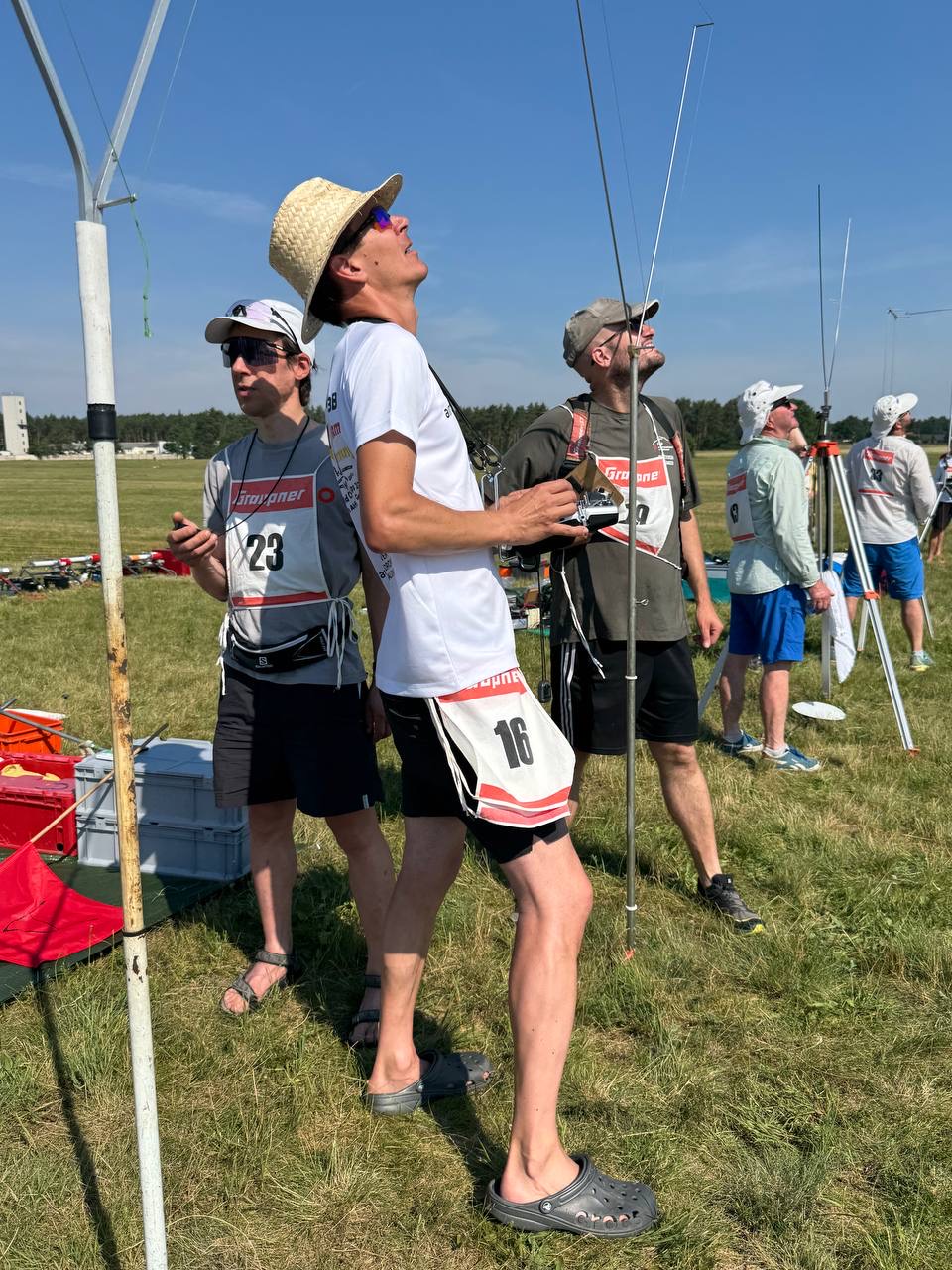
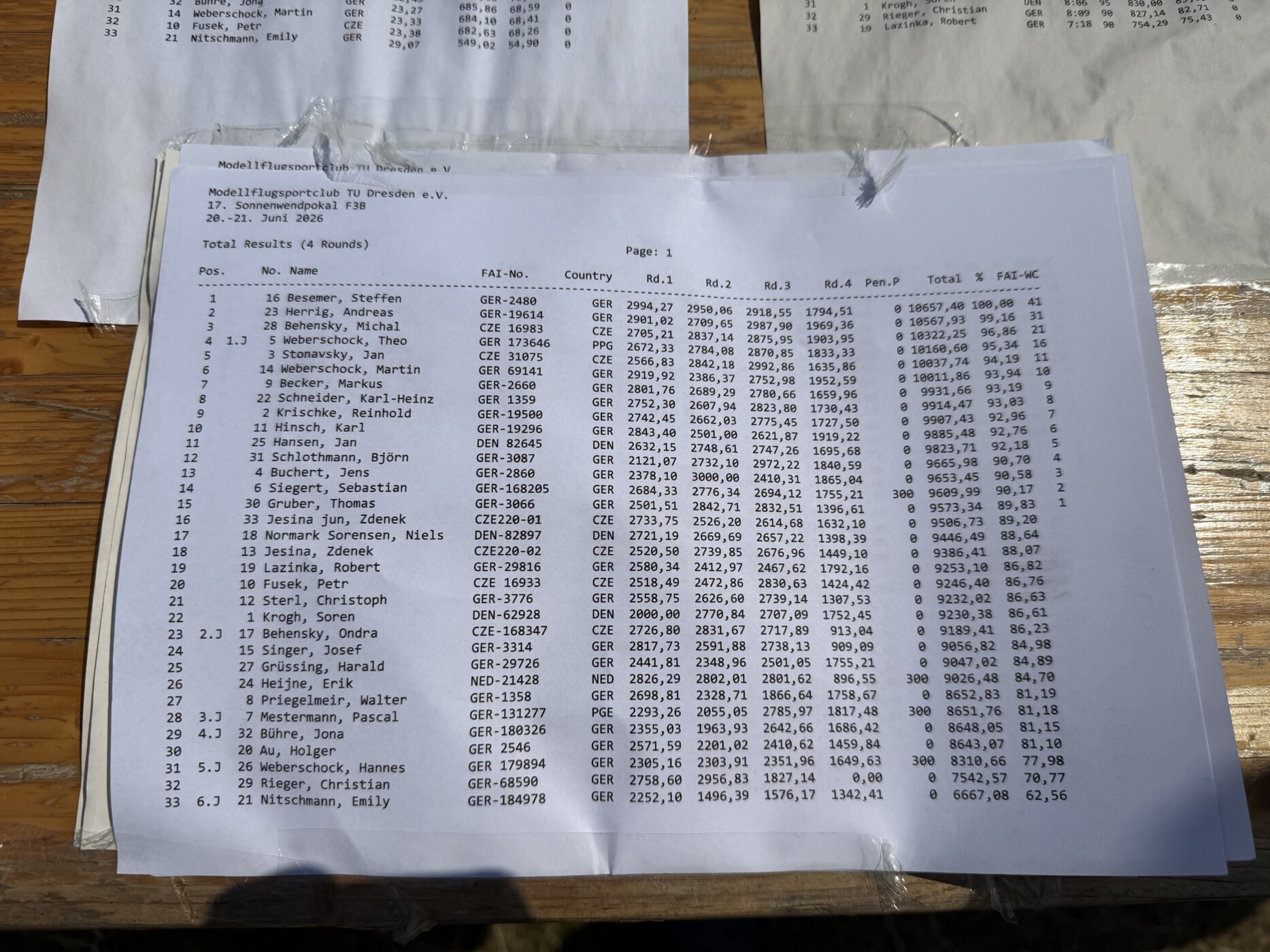
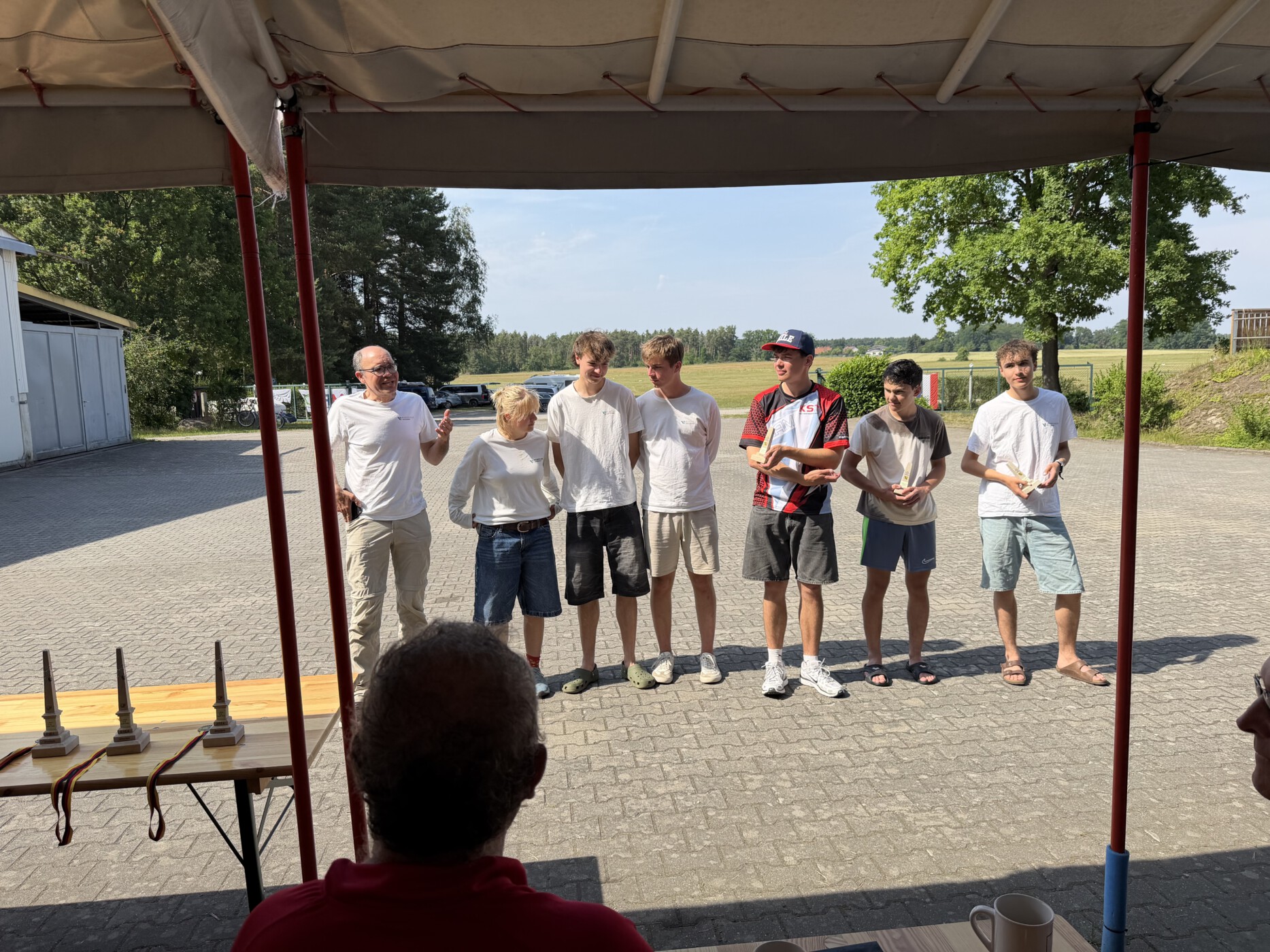
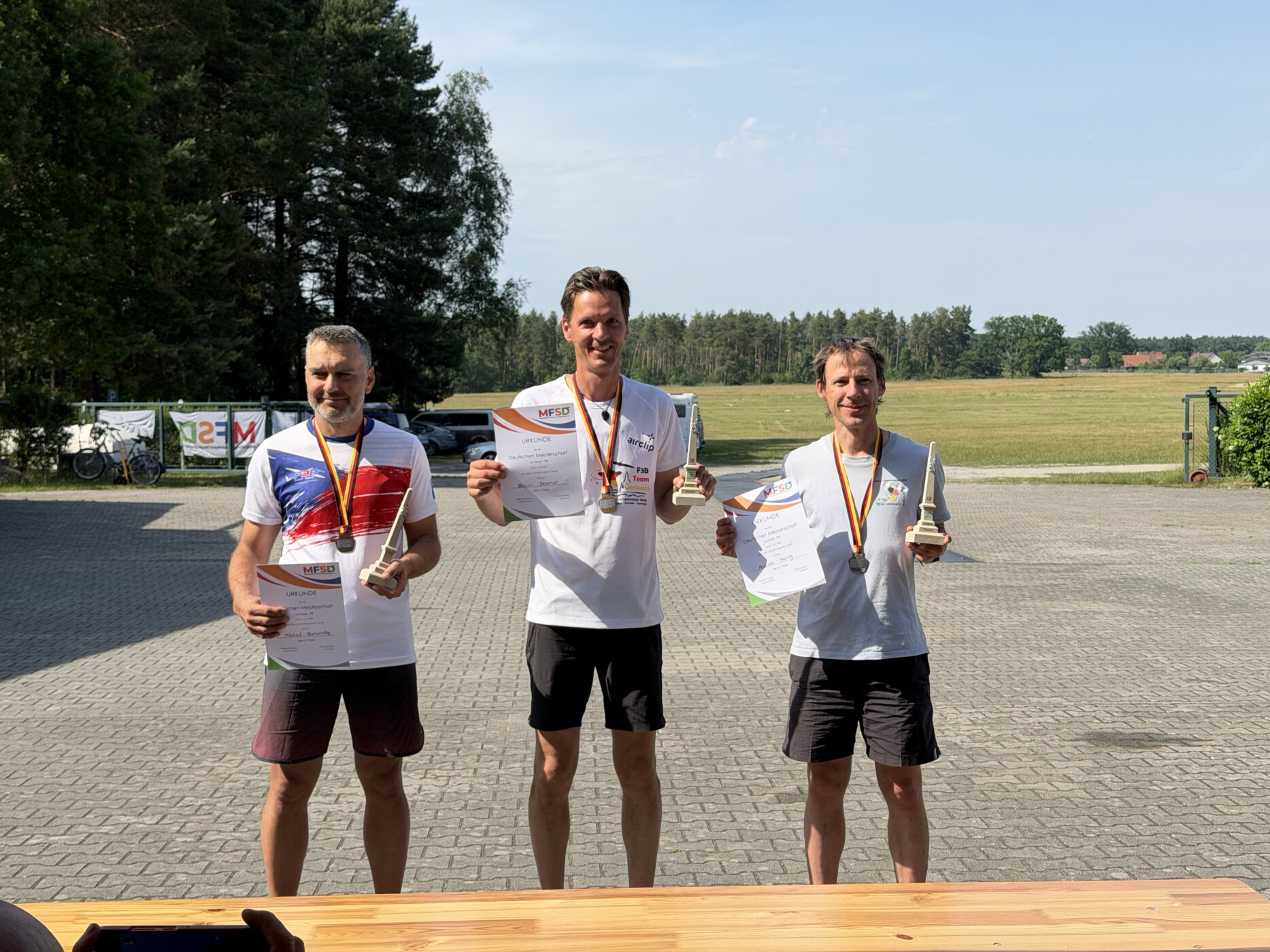
Steffen held onto his points lead from Saturday, giving up a few in Distance and Speed but doing enough to claim the overall win, German master and the Speed trophy, ahead of Andreas and Michal Behensky. Theo Weberschock had a standout weekend — strong, consistent flying earned him the Junior ranking and an impressive 4th place overall. The Juniors as a group were excellent; they flew in demanding conditions, didn’t default to easier duration flight areas but tried to actively get an advantage, and genuinely impressed experienced pilots with how far they’ve already come. The consistency will come — but it’s worth noting that very few pilots at any level have truly cracked that.
Team Foo had plenty to be happy about in the rankings overall. The author (Christian) had a „small“ setback and is heading back to the workshop. 🪛 Belgium is coming fast!
A huge thank you to the Nardt airfield, all the helpers, and organizers Dylla & Dylla for four rounds of flying, excellent weather management, and a weekend full of fun.
A few reminders before I sign off:
See you in Belgium! 🏆
Sunday 13:15
sorry for the late post. I had 2x technical difficulties.
we started with duration. Less wind than yesterday and already hotter with full sun.
interestingly no good thermals were there. But you had to find the less sinking area.
another distance round was similar. But thermals became a bit stronger.
afterwards speed round 3. Low altitudes. But some awesome speeds. Very precise and smooth.
after lunch we are now going for speed round 4.
22:30
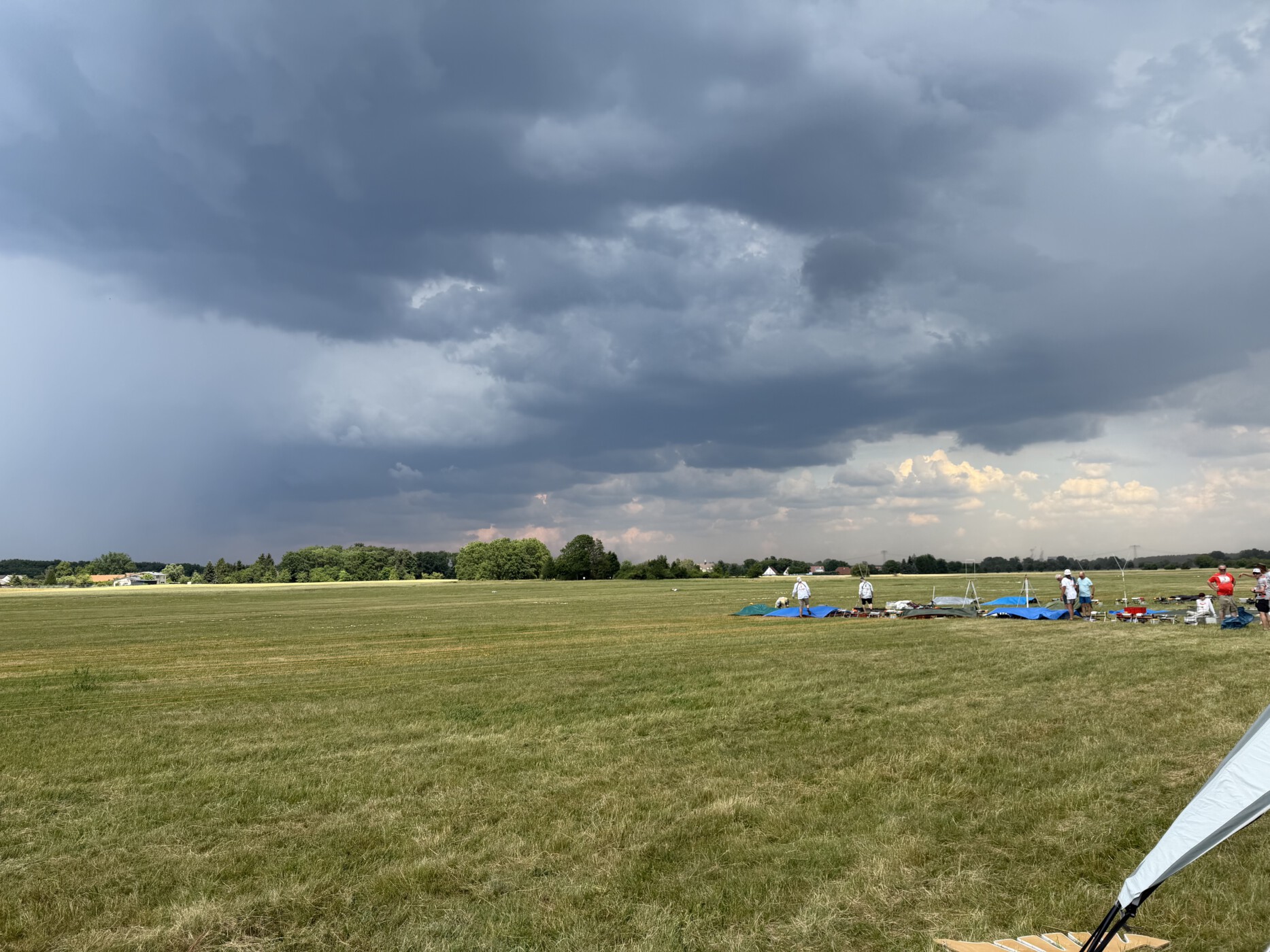
the day has ended. We finished 2 complete rounds and one duration flight. We were really lucky with the showers. The thunderstorms really developed just after passing us. We only had 2 or 3 small breaks with a little rain.
The temperatures also went down a bit with the rain, making it a bit easier. On the other hand we had a lot of line changing due to fluctuating wind speed and direction.
the first speed was quite standard. The second speed had low launch altitudes and in general much slower speeds.
the final duration was mostly possible, but never a safe thing. Low launch altitudes and very low thermal activity punished every single mistake immediately.
thats it for today. See you again tomorrow !
16:00
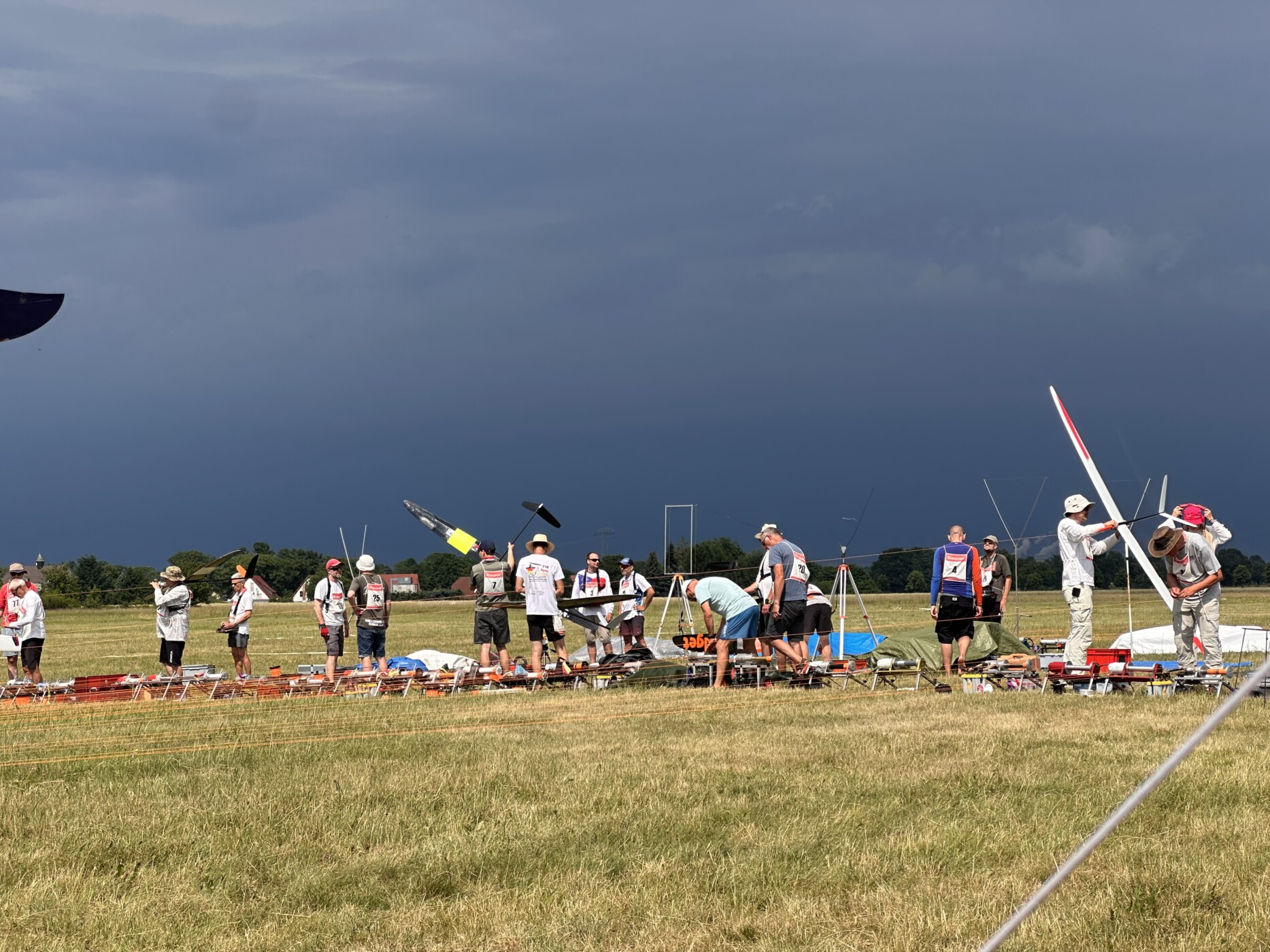
we first continued with duration. And two small rain showers later. We are now in speed.
wind is changing strength and direction frequently.
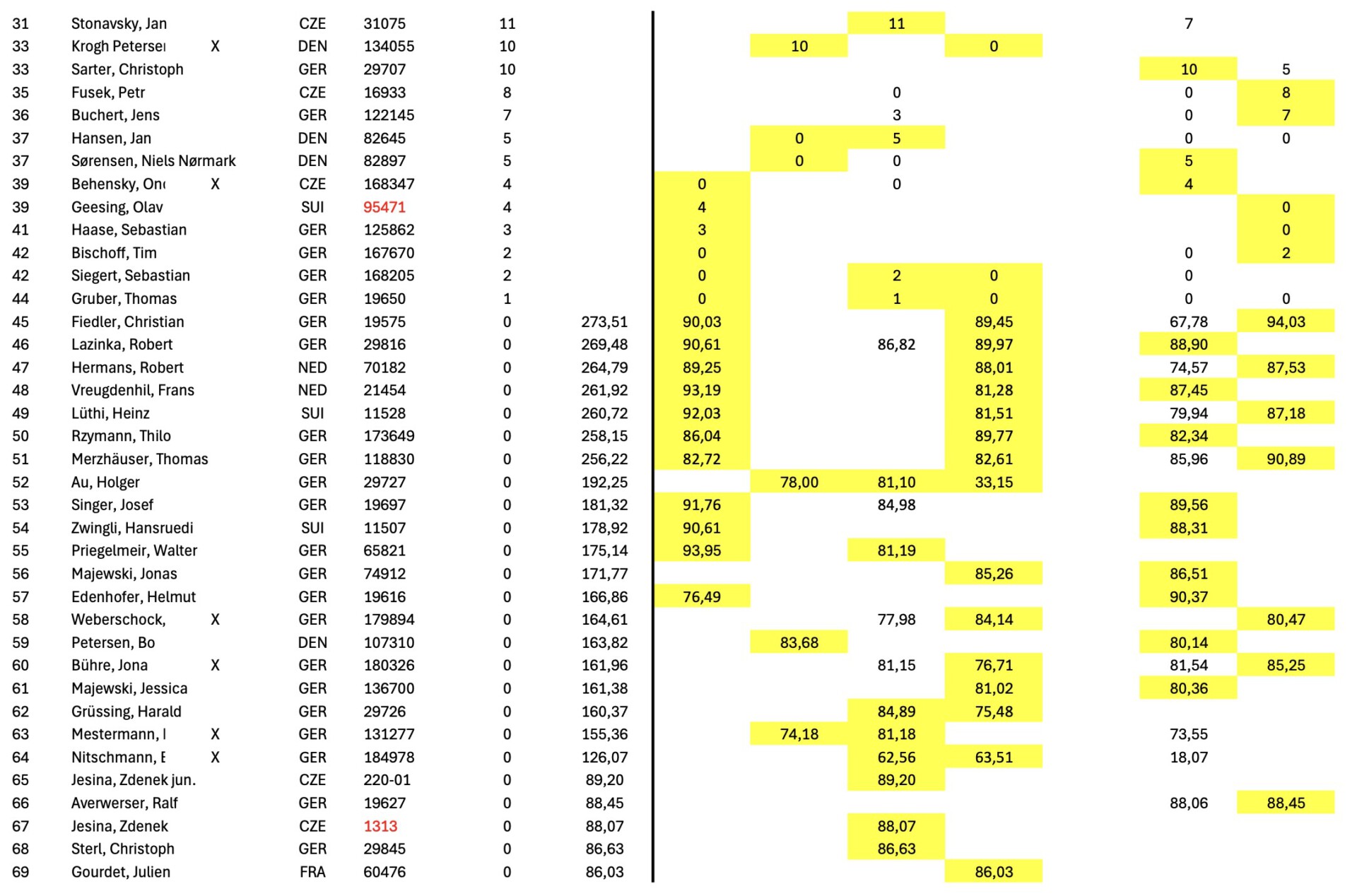
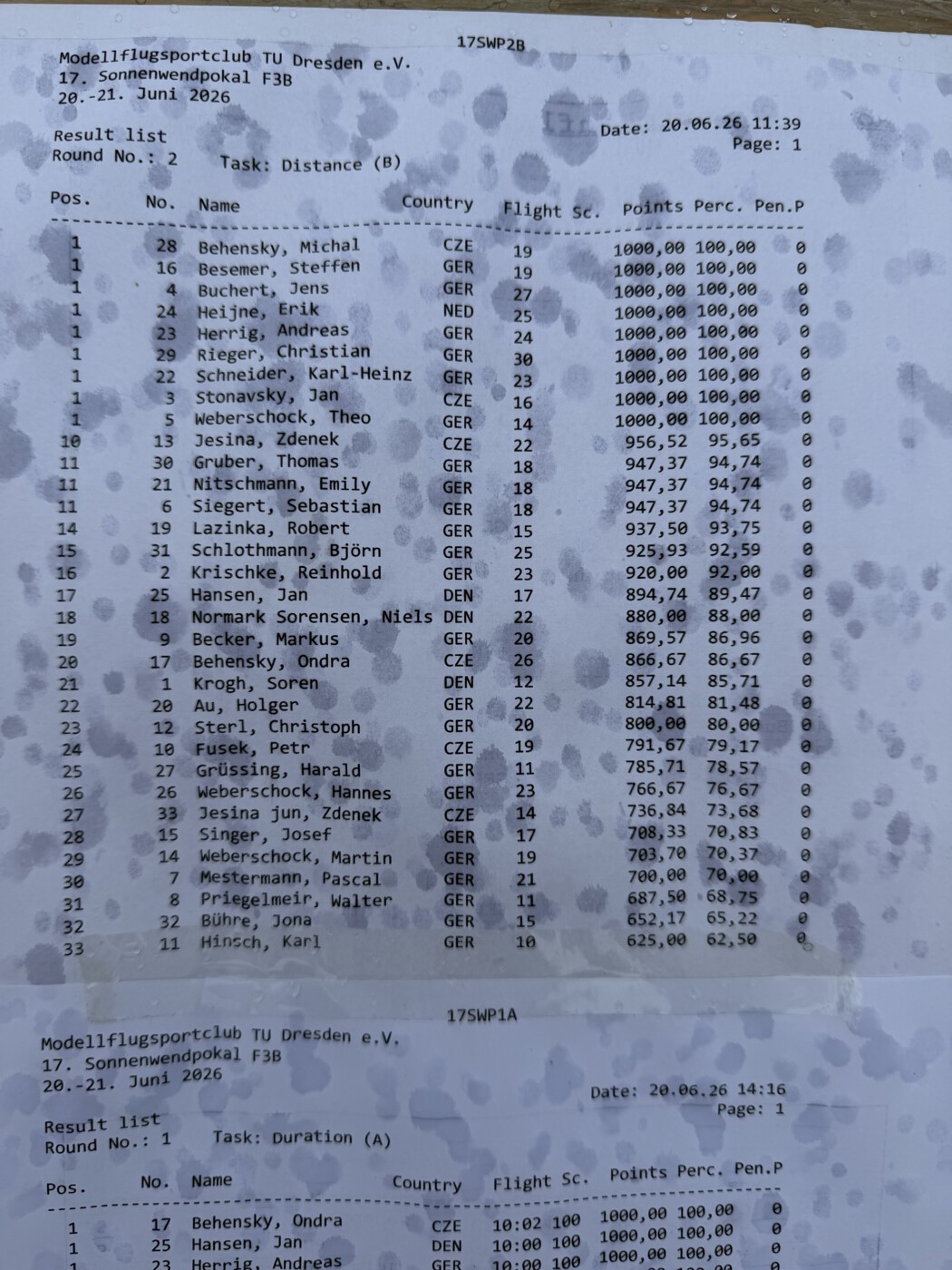
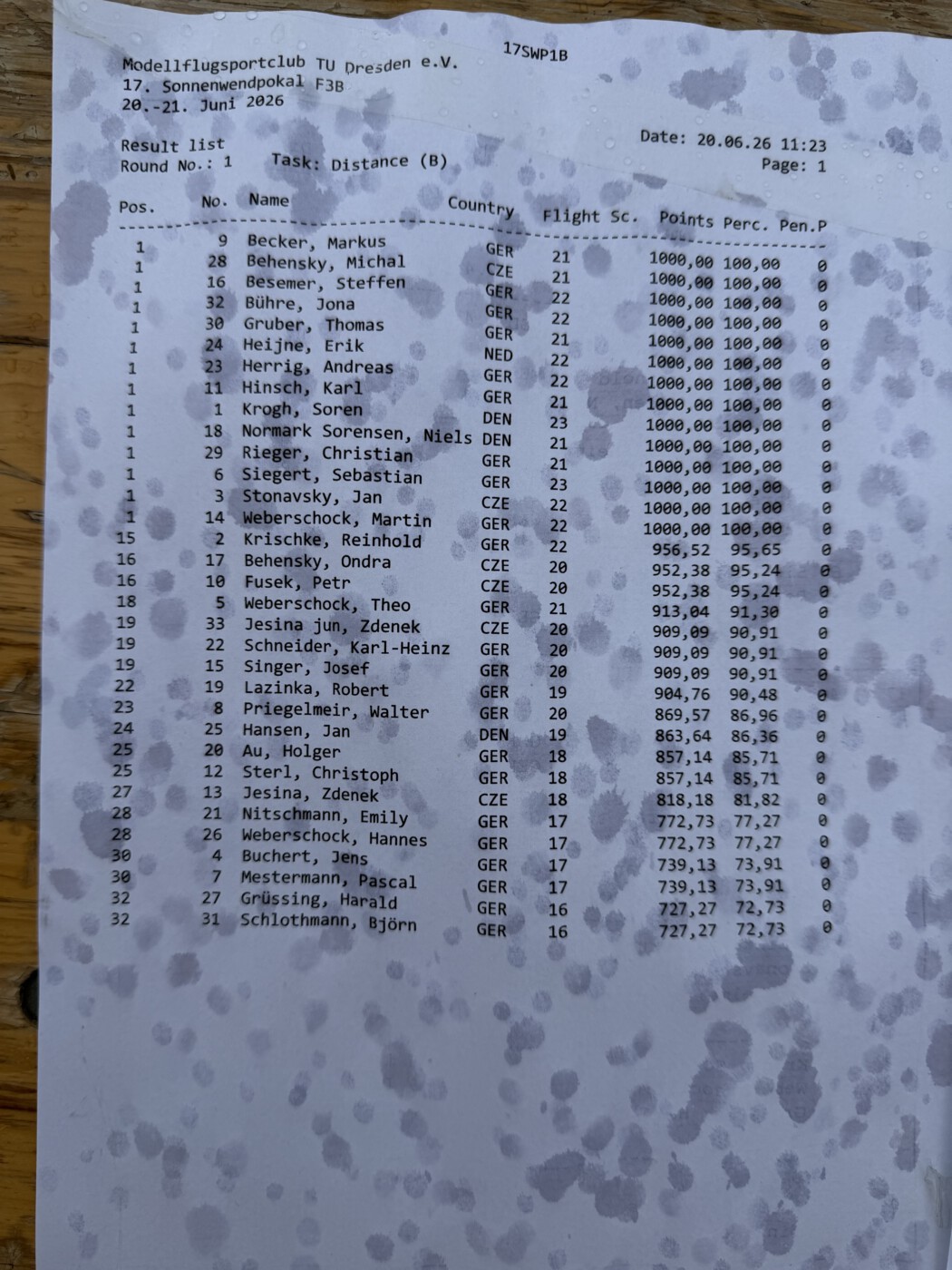
intermediate results in the gallery below.
12:55
we flew three groups duration and had lunch now. Awesome catering as always!
we will continue with speed in 5minutes due to the thunderstorms that are building up.
11:06
second round duration. Wind gets a little bit less, thermals get stronger.
we already have high temperatures and cloud free sky. Fortunately a bit of wind for a bit of refreshment.
10:10
we started with distance. Max legs around 20. Wind and thermals are there but difficult to find and rather weak.